

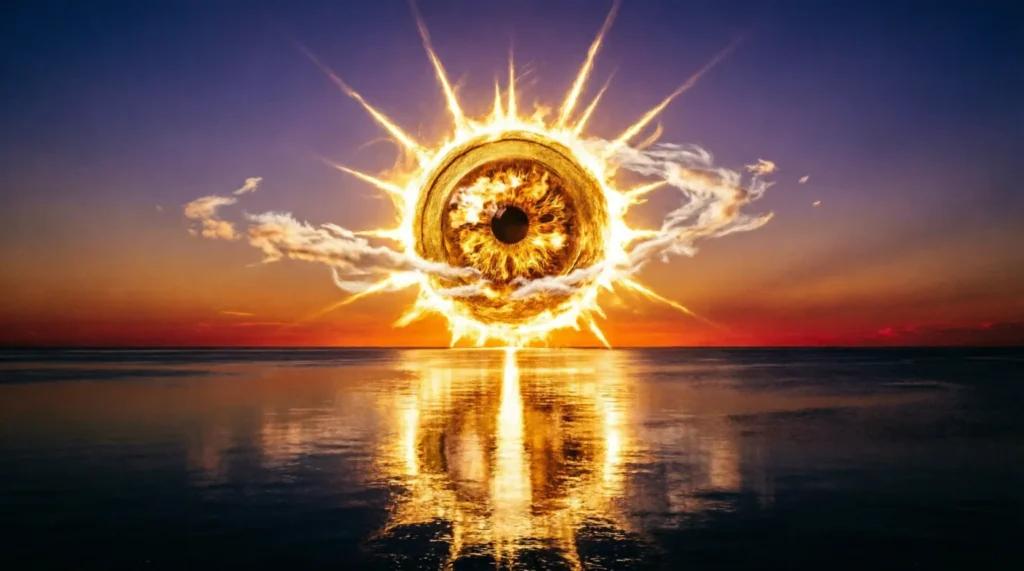
Similes and metaphors for the sun give writers a powerful toolkit for describing everything from a gentle morning glow to a scorching midday blaze. The examples below are organized by mood and intensity, each nestled in a real sentence so you can see exactly how it works and borrow it for your own writing.
Radiant and Warm: Uplifting Sun Comparisons
These similes capture the sun at its most welcoming—the golden light that makes us feel alive and hopeful.
“like a giant golden coin” — “The sun rose like a giant golden coin, spending its wealth of light across the valley.” (generous, optimistic). This one works because it turns the sun into currency, suggesting abundance we can all share.
“as warm as fresh-baked bread” — “Morning sunlight poured through the window, as warm as fresh-baked bread.” (comforting, nourishing). The sensory overlap of warmth and smell makes this surprisingly effective.
“like a welcoming embrace” — “The winter sun felt like a welcoming embrace after months of cold.” (relief, affection).
“as bright as a child’s laughter” — “Her smile was as bright as a child’s laughter in sunlight.” (joyful, innocent).
“like liquid gold” — “The afternoon light turned the fields like liquid gold.” (precious, flowing). This is the version my students reach for most often when describing sunset, and for good reason—it captures both color and movement.
“as cheerful as a morning bell” — “The sun peeked over the hills, as cheerful as a morning bell.” (alert, positive).
“like a spotlight on nature’s stage” — “The sun broke through the clouds like a spotlight on nature’s stage.” (dramatic, celebratory).
Fierce and Blazing: Intense Sun Metaphors
When the sun becomes an overwhelming force, these comparisons convey its raw power and sometimes dangerous heat.
“like a white-hot forge” — “The midday sun beat down like a white-hot forge.” (relentless, punishing). The industrial imagery here suggests something that transforms through extreme heat.
“as merciless as a tyrant” — “The desert sun ruled the sky as merciless as a tyrant.” (oppressive, dominating).
“like a blowtorch on the earth” — “August sunlight hit the pavement like a blowtorch on the earth.” (destructive, concentrated).
“as fierce as a dragon’s breath” — “The sun blazed overhead, as fierce as a dragon’s breath.” (mythical, threatening).
“like an unblinking eye” — “The sun stared down like an unblinking eye, refusing to look away.” (watchful, inescapable). This simile creates genuine unease by giving the sun agency and intention.
“as scorching as molten metal” — “The air shimmered, as scorching as molten metal.” (dangerous, industrial).
“like a furnace door flung open” — “Stepping outside felt like a furnace door flung open.” (sudden, overwhelming).
Gentle and Golden: Soft Morning and Evening Light
Not all sunlight burns. These similes work for dawn, dusk, and those perfect moments when light feels like a gift.
“like honey drizzled slow” — “Evening sunlight spread across the porch like honey drizzled slow.” (sweet, unhurried). The viscosity of honey mirrors how golden hour light seems to move through space.
“as soft as a whisper” — “Morning light filtered through the curtains, as soft as a whisper.” (delicate, intimate).
“like a painter’s gentle touch” — “The sun gilded the clouds like a painter’s gentle touch.” (artistic, careful).
“as tender as a mother’s hand” — “The early sun warmed her face, as tender as a mother’s hand.” (nurturing, protective).
“like butter melting on toast” — “Sunlight spread across the kitchen table like butter melting on toast.” (comforting, domestic). This is an overused comparison in food writing, but it still works because everyone knows that exact moment of spread.
“as pale as old lace” — “Winter sunlight fell as pale as old lace.” (fragile, nostalgic).
“like a lullaby made visible” — “The dusk light wrapped the room like a lullaby made visible.” (soothing, dreamlike).
Relentless and Unforgiving: When the Sun Becomes an Enemy
Sometimes the sun is the antagonist. These similes work for heat waves, droughts, and moments of exhaustion.
“like a hammer on an anvil” — “The sun pounded the earth like a hammer on anvil.” (repetitive, brutal). The sound imagery here—think of that rhythmic clang—makes the heat feel audible.
“as pitiless as a prison guard” — “The noon sun watched as pitiless as a prison guard.” (cruel, indifferent).
“like a weight on the shoulders” — “The sunlight pressed down like a weight on the shoulders.” (burdensome, exhausting).
“as draining as a long illness” — “The summer heat felt as draining as a long illness.” (depleting, slow).
“like a creditor demanding payment” — “The sun rose like a creditor demanding payment.” (insistent, unforgiving).
“as unyielding as stone” — “The heat sat on the landscape as unyielding as stone.” (immovable, permanent).
“like a fever that won’t break” — “The days stretched on, the sun burning like a fever that won’t break.” (sick, endless). This comparison to illness is particularly effective because it suggests the heat has infected the world itself.
Eternal and Constant: The Sun as Timekeeper
The sun marks our days and seasons. These similes emphasize its dependability and cosmic significance.
“like a faithful clock” — “The sun rose like a faithful clock, never a minute late.” (reliable, precise).
“as constant as the tide” — “The sun’s journey felt as constant as the tide.” (predictable, natural). According to Wikipedia’s discussion of metaphor, comparisons to natural cycles like this resonate because they tap into shared human experience.
“like an ancient promise” — “Each dawn arrived like an ancient promise kept.” (solemn, timeless).
“as steady as a heartbeat” — “The sun’s rhythm was as steady as a heartbeat.” (vital, reassuring).
“like a sentinel on watch” — “The sun stood guard like a sentinel on watch.” (protective, vigilant).
“as enduring as memory” — “That summer sunlight remained as enduring as memory.” (lasting, emotional).
Poetic and Mythic: Elevated Sun Imagery
When you need language that reaches for something grander, these literary comparisons draw on mythology and philosophy.
“like Apollo’s chariot wheel” — “The sun arced across the sky like Apollo’s chariot wheel.” (classical, majestic).
“as wise as an old god” — “The setting sun watched as wise as an old god.” (ancient, knowing).
“like a philosopher’s truth” — “The morning light revealed everything like a philosopher’s truth.” (illuminating, undeniable). Plato’s famous Analogy of the Sun compares the sun to the Form of the Good, suggesting that just as the sun makes vision possible, truth makes knowledge possible.
“as mysterious as a riddle” — “The sun behind clouds sat as mysterious as a riddle.” (enigmatic, compelling).
“like a crown on the sky’s head” — “The sun sat like a crown on the sky’s head.” (regal, central).
“as infinite as possibility” — “The sunrise stretched before them as infinite as possibility.” (hopeful, boundless).
How to Write Your Own Sun Simile
Creating fresh sun comparisons isn’t about finding the most obscure reference—it’s about noticing what the sun does in a specific moment and matching it to something unexpected but true.
Step 1: Identify the sun’s action or quality right now. Is it climbing, blazing, fading, hiding, reflecting?
Step 2: Think of an object, feeling, or action from a completely different category that shares that quality. Don’t reach for “like a diamond”—reach for “like a forgotten memory” or “like a debt coming due.”
Step 3: Test it aloud. If it sounds forced, simplify. The best similes feel inevitable once you hear them.
Worked example: Let’s say you’re describing late afternoon sun slanting through dusty windows. The action is “slanting” and the quality is “dramatic but gentle.” Instead of “like a spotlight,” try: “The sun fell through the window like a secret finally told.” The angle, the revelation, the softness—it all fits.
Frequently Asked Questions
What’s the difference between a simile and a metaphor for the sun?
A simile uses “like” or “as” to compare the sun to something else (“the sun was like a coin”), while a metaphor states the sun is that thing (“the sun was a coin”). Similes are more cautious and often clearer; metaphors are bolder and can feel more poetic but risk confusion if the comparison is too distant.
Which sun similes should I avoid in serious writing?
Skip “bright as the sun” (it’s circular), “sunny disposition” (cliché), and “hot as the sun” (too obvious). Also avoid mixing mythological references unless you’re committed to that tone—don’t say “like Apollo’s chariot” in one paragraph and “like a blowtorch” in the next unless you’re doing it deliberately for contrast.
Can I mix positive and negative sun similes in the same piece?
Absolutely, and you should if the sun’s role changes. A summer story might start with “the sun was like a welcoming embrace” in June and end with “the sun hung like a hammer” in August. The shift in your similes tracks the shift in mood. Just make sure the transition feels earned, not random.
How do I know if my sun metaphor is too complicated?
Read it aloud once. If you stumble or need to explain it to yourself, it’s too complicated. The best comparisons click instantly: “the sun was a coin,” “the sun was a hammer,” “the sun was honey.” If you find yourself thinking “well, what I mean is…” your reader will have that same thought, and they won’t wait around for the explanation.

Justin Brown is a seasoned literary analyst with over 15 years of experience in the field of linguistics and literary studies. Holding a master’s degree in English Literature from the University of Chicago, Justin has devoted much of his career to exploring the nuances of similes and other forms of figurative language. His passion for deciphering the layers of meaning in literary works was kindled during his undergraduate years, where he was intrigued by the power of metaphorical language. Justin frequently contributes to VividSimiles by crafting engaging articles that decode the application of similes in both classical and contemporary literature. His insightful analyses help readers grasp the beauty and complexity of figurative expressions, making literature more accessible to all. In addition to writing, Justin conducts workshops for aspiring writers, nurturing their abilities to use language vividly and effectively.