

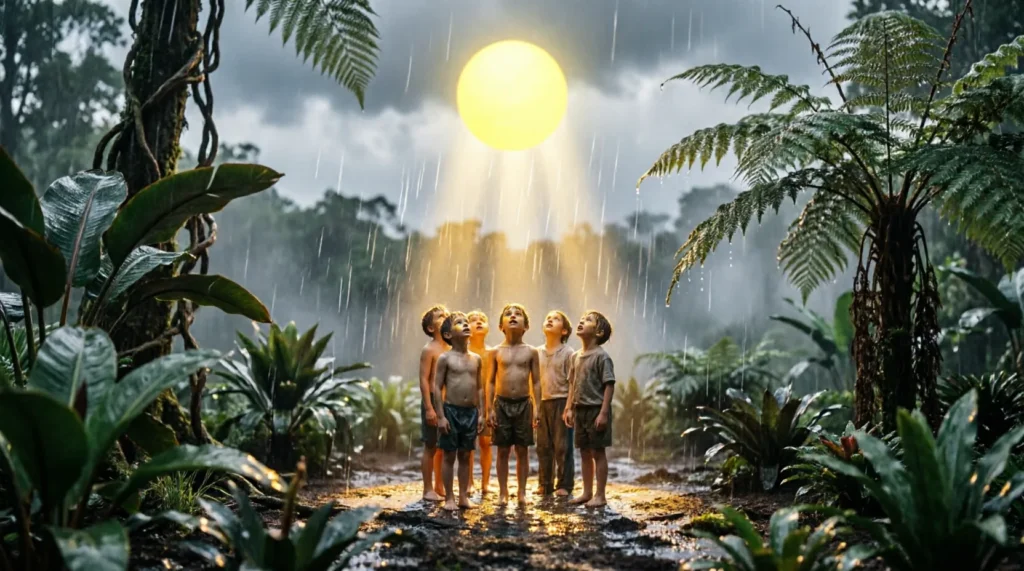
Ray Bradbury’s “All Summer in a Day” uses similes to transform the alien landscape of Venus into something readers can feel and see. These comparisons don’t just describe the setting—they capture the aching longing for sunlight and the devastating cruelty of children. Below, you’ll find every major simile from the story organized by theme, each shown in context so you can understand how Bradbury builds emotional resonance through figurative language.
What is a simile?
A simile is a figure of speech that directly compares two different things using “like” or “as” to highlight a shared quality. According to Wikipedia’s entry on Simile, this literary device creates vivid imagery by linking the unfamiliar to the familiar, making abstract or strange concepts more accessible to readers. Unlike a metaphor, which states that one thing is another, a simile maintains the distinction between the two elements while drawing attention to their similarity. In “All Summer in a Day,” Bradbury uses similes to help readers imagine Venus’s oppressive rain and the miraculous appearance of the sun through comparisons to everyday objects and experiences.
The Sun as Rare Treasure
Bradbury’s similes for the sun emphasize its preciousness and fragility in a world where it appears only once every seven years.
“like a penny” — “The sun came out from behind the clouds, small and bright like a penny.” (diminutive, precious) — This comparison reduces the massive sun to something small enough to hold, emphasizing how briefly and inadequately it appears to these children who’ve never known it.
“like a fire in the stove” — “The sun burned like a fire in the stove, warming everything it touched.” (domestic, comforting) — Bradbury grounds the cosmic in the household, making the sun feel intimate and knowable rather than distant and astronomical.
“like a yellow crayon” — “The sunlight was thick and waxy like a yellow crayon.” (tactile, childlike) — This is the version my students always reach for first when discussing sensory detail; it transforms light into something you could hold and color with, perfect for a story told through children’s eyes.
“like bronze” — “The sun was the color of flaming bronze.” (metallic, valuable) — Bronze suggests something ancient and enduring, contrasting with the fleeting nature of this particular summer day.
“like a coin” — “It shone like a bright coin dropped in the sky.” (monetary, lost) — The coin imagery reinforces the theme of something valuable that could be lost or spent, mirroring how the children literally lose Margot’s chance to see the sun.
“like a flower” — “The sun opened like a flower blooming in fast motion.” (organic, beautiful) — This simile connects the celestial to the botanical, suggesting natural cycles and growth.
“like gold” — “The light poured down like liquid gold.” (luxurious, transformative) — Gold implies both wealth and alchemy, the power to transform the gray world into something precious.
The Oppressive Rain and Venusian Landscape
The story’s opening similes establish Venus as a world defined by water and absence of light.
“like a drum” — “The rain beat down like a drum, endless and relentless.” (rhythmic, overwhelming) — The drum comparison creates an auditory image that emphasizes the inescapable nature of the rain.
“like a jungle” — “The jungle burned with sunlight where the sun was burning.” (primal, intense) — According to Wikipedia’s article on Summer, intense sunlight transforms landscapes, and Bradbury captures this by showing how quickly Venus’s vegetation responds to the rare sun.
“like a wild rose” — “The children ran like wild roses opening.” (sudden, natural) — This simile suggests both beauty and the uncontrollable nature of children’s impulses, foreshadowing their cruelty.
“like a great golden flower” — “The sun was a great golden flower blooming in the sky.” (magnificent, organic) — This is one of Bradbury’s strongest similes because it merges the celestial with the botanical, making the sun feel alive and growing rather than static.
“like a furnace” — “The heat came down like a furnace door opening.” (industrial, intense) — The furnace comparison suggests something mechanical and potentially dangerous, not just warm but overwhelmingly hot.
“like a tidal wave” — “The rain returned like a tidal wave, sweeping everything away.” (destructive, inevitable) — This simile emphasizes the power and inevitability of the rain’s return, crushing the brief summer.
Childhood Emotions and Cruelty
Bradbury uses similes to reveal the complex emotional landscape of the children, particularly their jealousy and regret.
“like a ghost” — “Margot stood apart from them, pale and silent like a ghost.” (ethereal, isolated) — This comparison emphasizes Margot’s otherness and fragility, making her victimization more poignant.
“like a shadow” — “She moved like a shadow, barely there.” (insubstantial, fading) — The shadow simile suggests someone who is present but not fully seen or acknowledged by the others.
“like a wound” — “The guilt sat in their stomachs like a wound.” (painful, internal) — This is a particularly effective simile because it transforms an emotion into a physical injury, showing how their cruelty harms them too.
“like a stone” — “The silence fell like a stone dropping into water.” (sudden, heavy) — The stone comparison creates a sense of weight and finality, marking the moment when the children realize what they’ve done.
“like a dream” — “The sun felt like a dream they’d all shared.” (ephemeral, unreal) — This simile captures how quickly the experience becomes questionable, whether it was real or imagined.
“like ice” — “Their faces went cold like ice.” (frozen, hardened) — The ice comparison shows how quickly joy can turn to horror and shame.
Time, Memory, and Longing
The similes in this category explore how the children experience time differently and how Margot’s memories set her apart.
“like seven years” — “They had waited like seven years in the dark.” (eternal, burdensome) — This simile compresses their entire existence into the wait for sunlight, showing how central this event is to their lives.
“like an old photograph” — “Margot remembered Earth like an old photograph fading.” (distant, deteriorating) — The photograph simile suggests something precious but deteriorating, capturing how memories fade without reinforcement.
“like a song” — “The memory played in her mind like a song she couldn’t stop humming.” (persistent, haunting) — This comparison shows how memory can be both beautiful and torturous when it can’t be shared or verified.
“like tomorrow” — “The sun was always like tomorrow, always coming but never here.” (elusive, promised) — This simile captures the perpetual deferral of hope, always just out of reach.
“like a clock” — “Time moved like a clock with no hands.” (confusing, meaningless) — Without the sun to mark days, time becomes abstract and unmeasurable for these children.
Movement and Transformation
Bradbury’s similes capture the physical changes that occur when the sun appears and disappears.
“like a river” — “The children poured outside like a river breaking its banks.” (forceful, unstoppable) — This simile emphasizes the collective energy and the way individual restraint dissolves in group excitement.
“like smoke” — “The clouds gathered like smoke from a fire.” (ominous, spreading) — The smoke comparison suggests something dangerous and all-consuming, foreshadowing the end of summer.
“like a balloon” — “The joy inflated them like a balloon.” (expansive, fragile) — This simile captures both the elevation of their spirits and the fragility of their happiness, ready to pop.
“like a shutter” — “The sky closed like a shutter slamming.” (sudden, final) — The shutter comparison creates a mechanical, deliberate quality to the sun’s disappearance, making it feel like a punishment.
“like melting” — “The children’s anger melted like butter in the sun.” (temporary, transformative) — This shows how the sun’s power extends beyond physical warmth to emotional transformation.
How to write your own Venus simile
Creating effective similes for an alien world like Venus requires grounding the strange in the familiar. Here’s my three-step process:
Step 1: Identify the core sensory experience (the oppressive weight of constant rain, the shocking intensity of sudden sunlight, the disorientation of never seeing the sky).
Step 2: Find an everyday object or experience that shares that quality but comes from a completely different category (don’t compare rain to other weather; compare it to music, or machinery, or animals).
Step 3: Test whether the comparison reveals something new about the subject rather than just describing it.
Worked example: Instead of “the rain was heavy,” try “the rain fell like a thousand typewriter keys striking at once”—this captures not just weight but rhythm, noise, and the mechanical relentlessness that characterizes Bradbury’s Venus.
Frequently Asked Questions
What is the most famous simile in “All Summer in a Day”?
The comparison of the sun to “a penny” or “a bronze coin” is among the most cited, as it perfectly captures both the sun’s diminished appearance through Venus’s atmosphere and its precious, spendable quality. Bradbury also frequently uses “like a fire in the stove” to domesticate the cosmic.
How do the similes in “All Summer in a Day” contribute to the theme?
The similes consistently contrast the mundane with the miraculous, showing how the children struggle to comprehend something as extraordinary as sunlight. They also emphasize the story’s central tension between memory and experience, using comparisons that suggest fading, fragility, and loss.
Why does Bradbury use so many nature-based similes for the sun?
By comparing the sun to flowers, roses, and other organic elements, Bradbury emphasizes its life-giving properties and natural beauty. These similes also create irony—the children on Venus have never seen actual flowers bloom, so comparing the sun to a flower suggests the sun itself is the flower they’ve been waiting to see.
What makes Bradbury’s similes more effective than simple description?
Bradbury’s similes work because they operate on multiple levels simultaneously. When he writes that the sun is “like a yellow crayon,” he’s describing its color, suggesting its childlike wonder, implying its artificiality in this context, and evoking the tactile experience of holding something waxy and bright. Simple description can tell you what something looks like; a great simile tells you what it feels like to experience it.

Jennifer Martinez is a creative writer and educator with a deep love for similes and figurative language. With a degree in Creative Writing from New York University and over a decade of teaching experience in high schools, Jennifer has a unique ability to explain complex concepts in simple terms. Her journey into the world of figurative language began with her own writing, where she noticed how similes and metaphors could transform the mundane into the extraordinary. At VividSimiles, Jennifer shares her expertise by writing thought-provoking essays and guides on how similes enhance storytelling. Her content often focuses on helping writers of all levels hone their style by incorporating figurative language effectively. In her spare time, Jennifer enjoys reading poetry and experimenting with new forms of expression in her own work.