

Similes give young writers a powerful way to make their descriptions sparkle with comparison. This collection offers third-grade students ready-to-use similes organized by theme, each shown in a real sentence so children can see exactly how these comparisons work in context.
What Is a Simile?
A simile is a figure of speech that compares two different things using the words “like” or “as.” According to Wikipedia’s entry on Simile, this literary device helps readers understand something unfamiliar by connecting it to something they already know. The key difference between a simile and a metaphor is that similes always use “like” or “as” to make the comparison explicit, while metaphors state that one thing is another thing without those connecting words.
Similes About Animals
Kids love animals, and animal similes are often the first comparisons children reach for because they’re vivid and memorable.
“as busy as a bee” — “My mom was as busy as a bee getting ready for the party.” (energetic, positive)
“as brave as a lion” — “The little girl was as brave as a lion when she got her shot.” (admiring, confident) Craft note: This works because lions carry universal recognition as symbols of courage, and the hard “b” sounds in “brave” and “bee” create a pleasing rhythm.
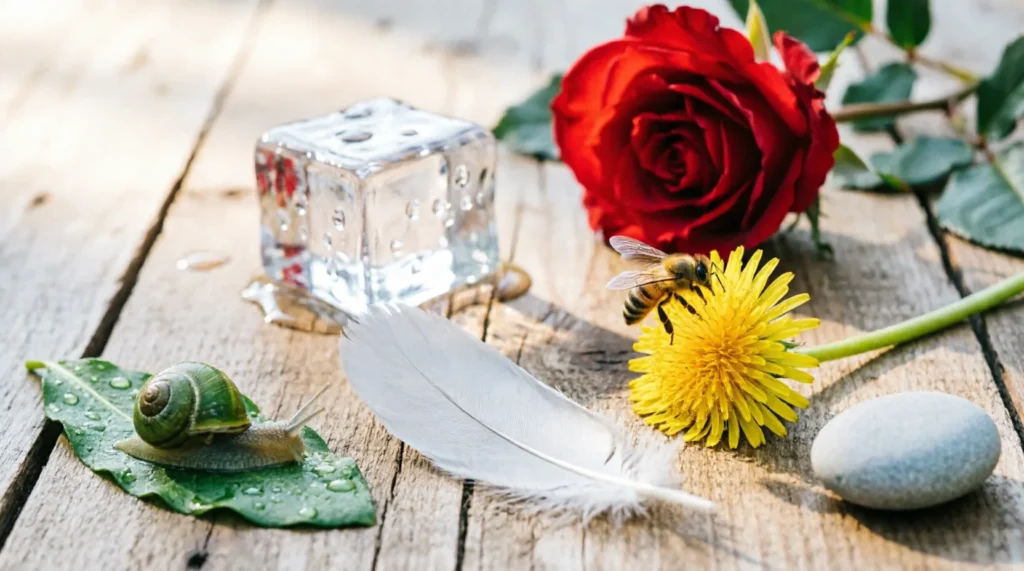
“as slow as a snail” — “On Monday mornings, I move as slow as a snail.” (playful, relatable)
“as wise as an owl” — “My grandfather is as wise as an owl.” (respectful, warm)
“as quiet as a mouse” — “During the test, the classroom was as quiet as a mouse.” (descriptive, atmospheric)
“as strong as an ox” — “The farmer was as strong as an ox after years of work.” (impressive, traditional)
“as sly as a fox” — “The detective was as sly as a fox when he solved the mystery.” (clever, admiring)
“as stubborn as a mule” — “My little brother is as stubborn as a mule about eating vegetables.” (frustrated, humorous) Craft note: The “st” alliteration in “stubborn” and “mule” (when spoken) creates a slightly resistant sound that mirrors the meaning.
“as graceful as a swan” — “The dancer moved as graceful as a swan across the stage.” (elegant, appreciative)
“as playful as a puppy” — “The children were as playful as a puppy at recess.” (joyful, energetic)
Similes About Nature and Weather
Nature provides endless comparison opportunities that help children connect their writing to the world around them.
“as bright as the sun” — “Her smile was as bright as the sun on a summer day.” (warm, glowing)
“as cold as ice” — “The water from the mountain stream was as cold as ice.” (sharp, immediate)
“as clear as crystal” — “The lake was as clear as crystal this morning.” (pure, pristine)
“as dark as night” — “The basement was as dark as night without any lights.” (ominous, complete)
“as fresh as a daisy” — “After her nap, she felt as fresh as a daisy.” (revived, cheerful)
“as hot as an oven” — “The car was as hot as an oven after sitting in the sun.” (uncomfortable, intense)
“as light as a feather” — “The new backpack was as light as a feather.” (relieved, easy) Craft note: The soft “f” sounds throughout create an actual feeling of lightness when spoken aloud.
“as old as the hills” — “That oak tree is as old as the hills.” (ancient, enduring)
“as quick as lightning” — “The soccer player was as quick as lightning.” (fast, impressive)
“as steady as a rock” — “My best friend is as steady as a rock when I’m upset.” (reliable, comforting)
Similes About Feelings and Emotions
Helping children articulate their emotions through comparison builds emotional intelligence alongside writing skills.
“as happy as a clam” — “He was as happy as a clam when he got the new bike.” (delighted, content)
“as mad as a hornet” — “Dad was as mad as a hornet when he saw the broken window.” (angry, intense)
“as nervous as a long-tailed cat in a room full of rocking chairs” — “I was as nervous as a long-tailed cat before my presentation.” (anxious, vivid) Craft note: This extended simile creates a specific, almost comical image that kids remember because of its unusual specificity.
“as proud as a peacock” — “She was as proud as a peacock after winning the spelling bee.” (vain, triumphant)
“as sad as a rainy day” — “He felt as sad as a rainy day when his friend moved away.” (melancholy, gentle)
“as scared as a rabbit” — “The little mouse was as scared as a rabbit when the cat appeared.” (frightened, vulnerable)
“as sick as a dog” — “After eating too much candy, I felt as sick as a dog.” (unwell, miserable)
“as surprised as a deer in headlights” — “She looked as surprised as a deer in headlights when we yelled ‘surprise!'” (shocked, frozen)
Similes About Everyday Objects and Food
These comparisons ground abstract ideas in concrete items children encounter daily, making them accessible and fun.
“as easy as pie” — “The math test was as easy as pie.” (simple, confident)
“as hard as a rock” — “The bread from yesterday was as hard as a rock.” (difficult, solid)
“as red as a rose” — “Her cheeks were as red as a rose after running.” (blushing, pretty)
“as sweet as honey” — “The little girl was as sweet as honey.” (kind, endearing)
“as tough as nails” — “My grandma is as tough as nails even though she’s small.” (resilient, admirable)
“as white as snow” — “The sheets were as white as snow after washing.” (clean, pure)
“as yellow as a lemon” — “The taxi was as yellow as a lemon.” (bright, distinctive)
“as flat as a pancake” — “After the truck ran over it, the ball was as flat as a pancake.” (defeated, humorous)
“as hot as a pepper” — “This salsa is as hot as a pepper!” (spicy, warning)
“as smooth as silk” — “The new lotion felt as smooth as silk.” (luxurious, pleasant) Craft note: The repeated “s” sounds create an actual smooth, sliding sensation when spoken.
Similes for School and Learning
These comparisons speak directly to the classroom experience, making them immediately relevant to third graders.
“as sharp as a tack” — “Sarah is as sharp as a tack in math class.” (intelligent, quick)
“as dull as dishwater” — “The lecture was as dull as dishwater.” (boring, lifeless)
“as neat as a pin” — “Her desk was as neat as a pin.” (organized, tidy)
“as fit as a fiddle” — “After summer camp, he was as fit as a fiddle.” (healthy, energetic)
“as right as rain” — “Once she apologized, everything was as right as rain.” (corrected, restored)
“as common as dirt” — “Pencils are as common as dirt in our classroom.” (ordinary, plentiful)
“as free as a bird” — “On the last day of school, we felt as free as a bird.” (liberated, joyful)
“as good as gold” — “The students were as good as gold during the assembly.” (well-behaved, perfect)
How to Write Your Own Simile for Class 3
Creating your own similes is easier than you might think. Here’s my three-step process that I use with my third-grade students:
Step 1: Think about what you want to describe (a feeling, a person, an object).
Step 2: Ask yourself: “What else is like this?” Brainstorm items, animals, or things from nature that share that quality.
Step 3: Connect them using “as…as” or “like.”
Worked Example: Let’s say you want to describe how fast your friend runs.
- What quality? Speed
- What else is fast? A cheetah, a race car, the wind
- Connect them: “My friend runs as fast as a cheetah” or “My friend runs like the wind”
The version my students always reach for first is comparing speed to animals or vehicles because those images are so clear in their minds.
Frequently Asked Questions
What makes a good simile for third graders? The best similes for class 3 use familiar comparisons that children can easily visualize. Animals, weather, food, and everyday objects work well because every child has experienced them. Avoid obscure references that require explanation.
How many similes should third graders learn? Start with 10-15 strong, versatile similes that students can use across different writing situations. Quality matters more than quantity. It’s better for children to master a few similes they can use confidently than to memorize dozens they’ll forget.
Can similes be too long for young writers? Yes, keep them concise. While creative extended similes have their place, third graders benefit most from clear, direct comparisons. “As brave as a lion” works better than “as brave as a lion facing down a hunter with nothing but courage and determination.”
What’s the difference between “like” and “as” in similes? Both create similes, but they’re used differently. Use “as…as” when comparing qualities (as tall as a tree). Use “like” when comparing actions or states (runs like the wind). Both are correct; they’re just different structures for the same literary device.
According to educational research on Class structures in learning, third grade represents a critical period where children transition from learning to read to reading to learn, making this the perfect time to introduce figurative language tools like similes.

Brian Walker is an esteemed linguist with a Ph.D. in Language and Literature from Stanford University. Over the past 20 years, Brian has dedicated his research to understanding the impact of figurative language on communication and literature. His extensive body of work includes scholarly articles that have been published in numerous academic journals. Brian’s fascination with similes emerged during his doctoral studies, where he examined their role in enhancing rhetorical persuasion and emotional resonance. As a contributor to VividSimiles, he writes detailed analyses on the historical evolution of similes and their varied applications across different cultures and languages. Brian’s articles are known for their depth and clarity, bridging the gap between academic research and practical application. He is committed to enlightening readers about the intricacies of language and the beauty of well-crafted similes.