

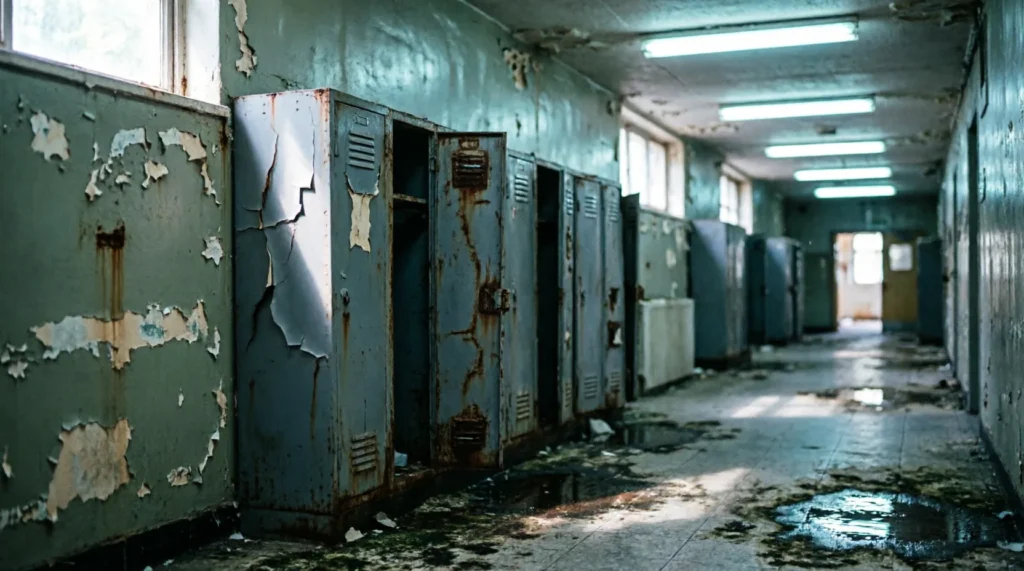
When you need to articulate the frustration, exhaustion, or sheer boredom of a terrible educational experience, reaching for a strong metaphor for school being bad can make your writing resonate. In my creative writing workshops, I constantly see students default to tired complaints, so I have curated this list to help you break that habit. Whether you are drafting a poignant college admissions essay, writing a lyric about the teenage grind, or just journaling through a difficult semester, use these similes to instantly ground your reader in the heavy, restrictive, or chaotic reality of a failing classroom environment.
What is a simile?
A simile is a figure of speech that directly compares two different things, usually using the words “like” or “as,” to highlight a shared quality. It differs from a metaphor because a simile acknowledges the comparison (saying something is like a prison), whereas a metaphor asserts that one thing literally is the other (saying the classroom is a prison). As noted on the Metaphor Wikipedia page, both devices transfer meaning, but similes often feel slightly more tentative or descriptive, making them perfect for capturing the subjective, personal miseries of a bad academic year.
Similes for Boredom and Monotony
- “like watching paint dry in a windowless room” — “Eighth-grade history was like watching paint dry in a windowless room.” (hyperbolic, agonizing).
- “as slow as a snail on sedatives” — “The final period dragged on as slow as a snail on sedatives.” (comedic, exhausted).
- “like listening to dial-up internet connect” — “His monotone lectures were like listening to dial-up internet connect.” (nostalgic, grating).
- “as repetitive as a skipping record” — “The daily morning announcements felt as repetitive as a skipping record.” (annoyed, cynical).
- “like chewing on cardboard” — “Reading that textbook was like chewing on cardboard.” (visceral, unappetizing; craft note: this triggers physical, tactile disgust, turning intellectual boredom into a sensory experience).
- “as stimulating as a waiting room at the DMV” — “The study hall was as stimulating as a waiting room at the DMV.” (dreary, bureaucratic).
- “like walking through wet cement” — “Getting through the morning assembly felt like walking through wet cement.” (heavy, laborious).
- “as engaging as reading the terms and conditions” — “The orientation video was as engaging as reading the terms and conditions.” (dry, universally ignored).
Similes for Confinement and Oppression
- “like a bird in a shoebox” — “She felt like a bird in a shoebox during the strict assembly.” (claustrophobic, fragile).
- “as trapped as a rat in a maze” — “We were as trapped as a rat in a maze of standardized testing.” (frantic, helpless).
- “like doing time in a minimum-security prison” — “Senior year felt like doing time in a minimum-security prison.” (cynical, institutional).
- “as suffocating as a wool sweater in July” — “The school’s rigid dress code was as suffocating as a wool sweater in July.” (irritated, uncomfortable; craft note: juxtaposing a warm winter garment with peak summer heat mirrors the mismatch between strict rules and a teenager’s need for comfort).
- “like being buried under a pile of wet blankets” — “The sheer weight of the homework was like being buried under a pile of wet blankets.” (overwhelmed, smothered).
- “as restricted as a museum exhibit” — “We had to keep our hands behind our backs, as restricted as a museum exhibit.” (resentful, objectified).
- “like a fish in a bowl of dirty water” — “By Friday, the classroom air felt like a fish in a bowl of dirty water.” (stale, toxic).
- “like a pawn on a board you can’t see” — “Standardized testing left us feeling like a pawn on a board you can’t see.” (powerless, manipulated).
Similes for Chaos and Hostility
- “like a gladiator arena without the armor” — “The cafeteria at lunch was like a gladiator arena without the armor.” (violent, hyperbolic).
- “as welcoming as a bouncer at a closed club” — “The principal’s office was as welcoming as a bouncer at a closed club.” (intimidating, cold).
- “like walking through a minefield” — “Navigating the hallway cliques was like walking through a minefield.” (tense, paranoid; craft note: pairing a known trope for social anxiety with “hallway cliques” grounds abstract fear in specific school geography).
- “as loud as a jet engine in a library” — “The pep rally was as loud as a jet engine in a library.” (jarring, sensory).
- “like a pack of wolves fighting over scraps” — “The group project devolved into something like a pack of wolves fighting over scraps.” (savage, desperate).
- “as toxic as a chemical spill” — “The locker room gossip was as toxic as a chemical spill.” (dangerous, corrosive).
- “like dodging dodgeballs in the dark” — “Trying to avoid the bullies felt like dodging dodgeballs in the dark.” (fearful, disorienting).
- “as unpredictable as a faulty smoke alarm” — “The substitute teacher’s temper was as unpredictable as a faulty smoke alarm.” (jarring, stressful).
Similes for Uselessness and Futility
- “like trying to empty the ocean with a slotted spoon” — “Tutoring him in algebra was like trying to empty the ocean with a slotted spoon.” (futile, absurd).
- “as effective as a screen door on a submarine” — “The school’s anti-bullying policy was as effective as a screen door on a submarine.” (mocking, cynical).
- “like shouting into a hurricane” — “My guidance counselor’s advice felt like shouting into a hurricane.” (hopeless, ignored).
- “as productive as a hamster on a wheel” — “The busywork assignments were as productive as a hamster on a wheel.” (frustrated, cyclical).
- “like watering a plastic plant” — “Memorizing those dates for the test was like watering a plastic plant.” (hollow, pointless; craft note: the irony of performing a nurturing act on something fundamentally artificial captures the tragedy of rote memorization).
- “as useful as a single chopstick” — “The outdated library computers were as useful as a single chopstick.” (comedic, inadequate).
- “like pushing a boulder up a hill of ice” — “Trying to stay awake during the assembly was like pushing a boulder up a hill of ice.” (exhausting, slippery).
- “like trying to nail jelly to a wall” — “Explaining the new grading rubric to the freshman class was like trying to nail jelly to a wall.” (impossible, messy).
How to write your own bad school experience simile
Step 1: Identify the specific negative emotion you want to convey, such as exhaustion, social anxiety, or intellectual starvation.
Step 2: Find a real-world object or situation outside the classroom that perfectly mirrors that feeling in your own life.
Step 3: Connect them using “like” or “as,” ensuring the resulting image is concrete and sensory rather than abstract.
Worked example: If you want to describe the feeling of being ignored by the administration, think of a physical object that is present but entirely unhelpful. You might write, “Complaining to the dean was like talking to a vending machine that ate your dollar.” (infuriating, transactional). According to the Wikipedia entry on School, educational institutions are fundamentally designed to provide structured learning environments for students; when that designed environment fails its core purpose, comparing it to a broken machine highlights the glaring gap between the ideal and the reality.
Frequently Asked Questions
Why use a simile instead of just saying “school sucks”? Similes force the reader to visualize the specific type of misery, whether it is the claustrophobia of a strict dress code or the chaos of a crowded hallway, turning a vague complaint into a vivid, relatable scene.
Are metaphors better than similes for describing a bad school? Metaphors (“this school is a prison”) sound more authoritative and absolute, while similes (“this school is like a prison”) sound more personal and observational. Choose based on whether your narrator is stating a universal fact or sharing a subjective, lived experience.
How do I avoid clichés when writing about a bad school? Skip the overused “school is a prison” or “teachers are wardens” tropes that my students always reach for first. Instead, pull from highly specific, modern frustrations—like comparing a useless group project to trying to nail jelly to a wall, or a dead Wi-Fi network to a dial-up modem.
Can I use these similes in a college admissions essay? Absolutely, but use them to show resilience, humor, or sharp observation rather than just complaining. A well-placed simile about a chaotic cafeteria can serve as a brilliant, grounding backdrop to a story about how you learned to find quiet focus amidst the noise.

Brian Walker is an esteemed linguist with a Ph.D. in Language and Literature from Stanford University. Over the past 20 years, Brian has dedicated his research to understanding the impact of figurative language on communication and literature. His extensive body of work includes scholarly articles that have been published in numerous academic journals. Brian’s fascination with similes emerged during his doctoral studies, where he examined their role in enhancing rhetorical persuasion and emotional resonance. As a contributor to VividSimiles, he writes detailed analyses on the historical evolution of similes and their varied applications across different cultures and languages. Brian’s articles are known for their depth and clarity, bridging the gap between academic research and practical application. He is committed to enlightening readers about the intricacies of language and the beauty of well-crafted similes.