

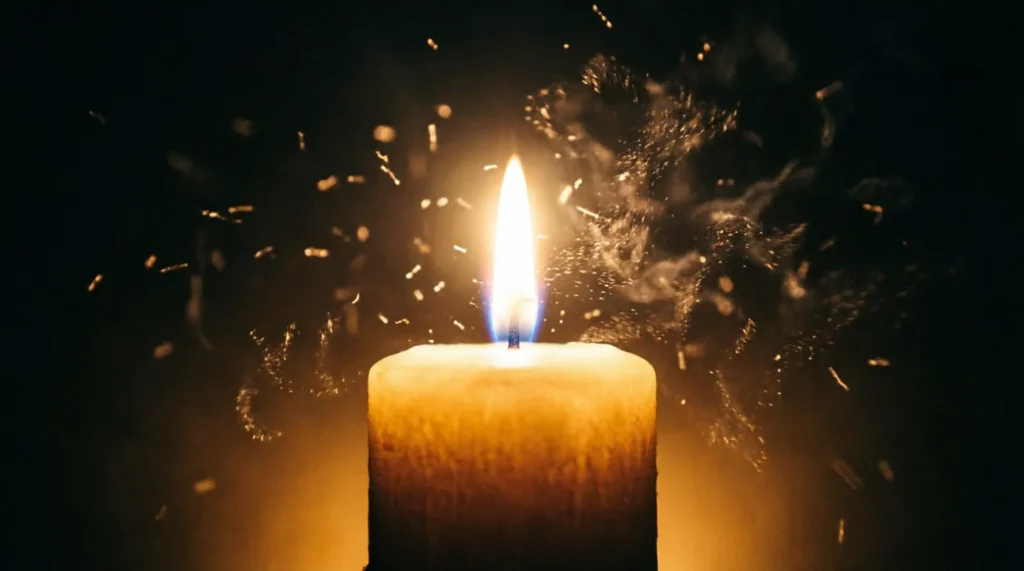
When we write about hope, clarity, or sudden understanding, we are almost always writing about light breaking through darkness. These metaphors do more than describe a visual scene; they map the internal landscape of human experience onto the physical world. The examples below are categorized by emotional tone and intensity, giving you immediate, ready-to-use options for your next poem, essay, or narrative. Use them to anchor abstract feelings in concrete imagery that readers can see and feel.
What Is a Metaphor?
Before we dive into the specific imagery, it helps to clarify our terms. A metaphor is a figure of speech that describes an object or action in a way that isn’t literally true but helps explain an idea or make a comparison Metaphor. Unlike a simile, which uses “like” or “as” to compare two things (e.g., “hope is like a candle”), a metaphor states that one thing is another (e.g., “hope is a candle”). This direct identification creates a stronger, more immediate connection in the reader’s mind. While similes suggest resemblance, metaphors assert identity, making them particularly powerful when describing the stark contrast between light and Darkness.
Gentle Hope and Quiet Resilience
Not all light needs to be blinding. Sometimes, the most powerful metaphors for light in darkness are those that suggest persistence rather than power. These images work best when you want to convey endurance, quiet confidence, or the slow return of hope after a long struggle.
- “A single candle in a vast cathedral” — “Her resolve was a single candle in a vast cathedral, small but refusing to be extinguished by the draft.” (quiet, steadfast)
- Craft Note: This works because of the scale contrast. The “vast cathedral” emphasizes the overwhelming nature of the darkness, making the “single candle” seem fragile yet heroic due to its solitude.
- “The pilot light of a forgotten stove” — “His optimism remained the pilot light of a forgotten stove, invisible but always ready to ignite.” (subtle, potential)
- Craft Note: I often tell my students to look for domestic, overlooked sources of light. This metaphor feels lived-in and realistic, avoiding the grandiosity of celestial bodies.
- “Bioluminescence in deep water” — “Their kindness was bioluminescence in deep water, a cold but undeniable glow in the pressure of the abyss.” (ethereal, surprising)
- “The ember beneath the ash” — “Grief had covered everything, but joy was still the ember beneath the ash, waiting for a breath.” (hidden, warm)
- “Moonlight on wet pavement” — “The truth emerged like moonlight on wet pavement, reflecting what was already there but previously unseen.” (reflective, clarifying)
- “A night-light in a hallway” — “Her advice was a night-light in a hallway, not enough to read by, but enough to keep me from stumbling.” (practical, comforting)
- “The first star at twilight” — “He was the first star at twilight, appearing before the sky was fully ready for him.” (premature, bright)
- “Glow-worms in a jar” — “Their memories were glow-worms in a jar, contained but still pulsing with soft green life.” (contained, nostalgic)
Avoid the cliché of “a light at the end of the tunnel” unless you are subverting it. It has been used so frequently in self-help contexts that it has lost its visceral impact. Instead, try to locate the light within the darkness, not just at the exit.
Sudden Insight and Epiphany
These metaphors capture the moment when confusion clears. They are violent, fast, and transformative. Use these when your character realizes something shocking, solves a complex problem, or sees a situation in a completely new way.
- “A lightning strike in a blackout” — “The realization hit him like a lightning strike in a blackout, brief but illuminating every corner of the room.” (shocking, total)
- Craft Note: The effectiveness here lies in the suddenness. A blackout implies total sensory deprivation, so the lightning strike is not just bright; it is disorienting and absolute.
- “A flare gun in a cave” — “Her question was a flare gun in a cave, revealing the stalactites of his deceit.” (revealing, harsh)
- “Switching on a floodlight” — “Understanding came like switching on a floodlight, bleaching out the shadows where I had hidden my doubts.” (exposing, clinical)
- “A match struck in a powder keg” — “His confession was a match struck in a powder keg, instant and explosive.” (dangerous, fast)
- “Sunrise over a mountain peak” — “The answer rose like sunrise over a mountain peak, inevitable and blinding once it cleared the horizon.” (grand, natural)
- “A camera flash in a dark room” — “Memory returned as a camera flash in a dark room, freezing a single frame while leaving the rest in blur.” (fragmented, sharp)
- “Breaking the surface of a dark lake” — “Clarity felt like breaking the surface of a dark lake, gasping for air after holding my breath for too long.” (relief, physical)
- “A lighthouse beam sweeping the shore” — “Her logic was a lighthouse beam sweeping the shore, methodical and cutting through the fog.” (systematic, guiding)
When writing epiphanies, avoid passive voice. The light should do something. It should cut, reveal, burn, or expose. The verb choice is just as important as the noun.
Guidance and Safety
Light often serves as a beacon. In these metaphors, the light is not just visible; it is directional. It leads, protects, or warns. These are ideal for mentors, moral compasses, or moments of decision-making.
- “A lantern in a snowstorm” — “His integrity was a lantern in a snowstorm, diffusing the light but keeping the path visible.” (protective, steady)
- Craft Note: Snow scatters light, creating a glow rather than a beam. This metaphor suggests that the guidance is gentle and adaptable to chaotic conditions, unlike a rigid laser.
- “Headlights on a winding road” — “Her intuition was headlights on a winding road, only showing me the next ten feet, but enough to keep moving.” (limited, trustworthy)
- “A runway strip in the night” — “The contract was a runway strip in the night, guiding us safely down from the turbulence of negotiation.” (structural, safe)
- “A firefly leading the way” — “Hope was a firefly leading the way, erratic but persistent in its direction.” (fragile, organic)
- “The glow of a campfire” — “Their friendship was the glow of a campfire, drawing us in from the cold edges of the forest.” (communal, warm)
- “A neon sign in a rainstorm” — “The bar was a neon sign in a rainstorm, buzzing and colorful against the gray monotony.” (vibrant, artificial)
- “A porch light left on” — “Her invitation was a porch light left on, a silent promise that someone was waiting.” (welcoming, domestic)
- “Compass needle pointing north” — “His values were the compass needle pointing north, unaffected by the magnetic interference of popularity.” (unyielding, true)
Be careful with “guiding light” metaphors. They can easily slip into sentimentality. Ground them in specific, tangible objects like runways, porches, or headlamps to keep them fresh.
Overwhelming Power and Destruction
Light is not always benevolent. It can be scorching, blinding, or invasive. These metaphors are useful for depicting trauma, harsh truths, or authoritarian control. Here, the darkness might actually be preferable to the light.
- “An interrogation lamp” — “The truth was an interrogation lamp, swung directly into my eyes until I had nowhere to hide.” (aggressive, painful)
- Craft Note: This metaphor works because it associates light with coercion. It removes the romanticism of illumination and replaces it with the discomfort of exposure.
- “A supernova” — “Her anger was a supernova, burning out everything around it in a final, brilliant explosion.” (catastrophic, final)
- “White-out conditions” — “The scandal created white-out conditions, erasing all context and leaving us blind.” (disorienting, empty)
- “A welding arc” — “His criticism was a welding arc, searing and impossible to look at directly.” (industrial, hot)
- “Midday sun in the desert” — “The scrutiny was midday sun in the desert, offering no shade and evaporating any moisture of doubt.” (relentless, dry)
- “A strobe light in a panic” — “My thoughts were a strobe light in a panic, flashing disjointed images too fast to process.” (chaotic, fragmented)
- “Laser focus” — “Her hatred was laser focus, burning a hole through every excuse I offered.” (precise, destructive)
- “Forest fire backlight” — “The crisis was the backlight of a forest fire, turning the trees into silhouettes and hiding the details.” (obscuring, dramatic)
Note that in these examples, the light often obscures rather than reveals. This is a crucial distinction. Brightness can blind just as effectively as darkness can hide.
How to Write Your Own Light Metaphor
Creating your own metaphors for light in darkness requires moving beyond the obvious sources like suns and stars. Follow these three steps to generate fresh imagery.
- Identify the Source: Look for light sources in specific, non-poetic environments. Think of hospitals, mechanics’ garages, underwater scenes, or digital screens. A “glowing router light” feels different than a “star.”
- Define the Interaction: How does the light interact with the darkness? Does it pierce, diffuse, reflect, or flicker? The verb matters. A light that “bleeds” into the darkness suggests weakness; a light that “slashes” suggests violence.
- Anchor in Emotion: Match the physical property of the light to the emotional state. If the emotion is confusing, use scattered light (reflections, prisms). If the emotion is clear, use direct light (beams, lasers).
Worked Example:
- Subject: A sudden memory returning.
- Source: A motion-sensor security light.
- Interaction: It snaps on unexpectedly when movement is detected.
- Result: “The memory was a motion-sensor security light, snapping on harsh and white the moment I walked past the old house.”
Frequently Asked Questions
Why are light metaphors so common in literature? Light is a universal human experience tied to survival and safety. Historically, darkness meant danger and the unknown, while light meant community and visibility. According to Darkness, the absence of light has profound psychological effects, making the return of light a powerful symbol for relief and understanding.
How do I avoid clichés when writing about light? Avoid generic terms like “beam of hope” or “ray of sunshine.” Instead, specify the type of light (neon, bioluminescent, fluorescent) and the context (a rainy alley, a deep sea, a sterile office). Specificity kills clichés.
Can darkness be positive in these metaphors? Yes. Darkness can represent rest, privacy, or potential. When using light metaphors, consider if the light is unwanted. For example, “the intrusive glare of the morning sun” frames light as a disturbance rather than a gift.
What is the difference between a metaphor and a simile for light? A simile compares using “like” or “as” (e.g., “hope is like a dawn”), while a metaphor asserts identity (e.g., “hope is the dawn”). Metaphors are generally stronger and more direct, while similes allow for more nuance and hesitation. As noted in the definition of Metaphor, the direct assertion of a metaphor creates a tighter cognitive link for the reader.

Jennifer Martinez is a creative writer and educator with a deep love for similes and figurative language. With a degree in Creative Writing from New York University and over a decade of teaching experience in high schools, Jennifer has a unique ability to explain complex concepts in simple terms. Her journey into the world of figurative language began with her own writing, where she noticed how similes and metaphors could transform the mundane into the extraordinary. At VividSimiles, Jennifer shares her expertise by writing thought-provoking essays and guides on how similes enhance storytelling. Her content often focuses on helping writers of all levels hone their style by incorporating figurative language effectively. In her spare time, Jennifer enjoys reading poetry and experimenting with new forms of expression in her own work.