

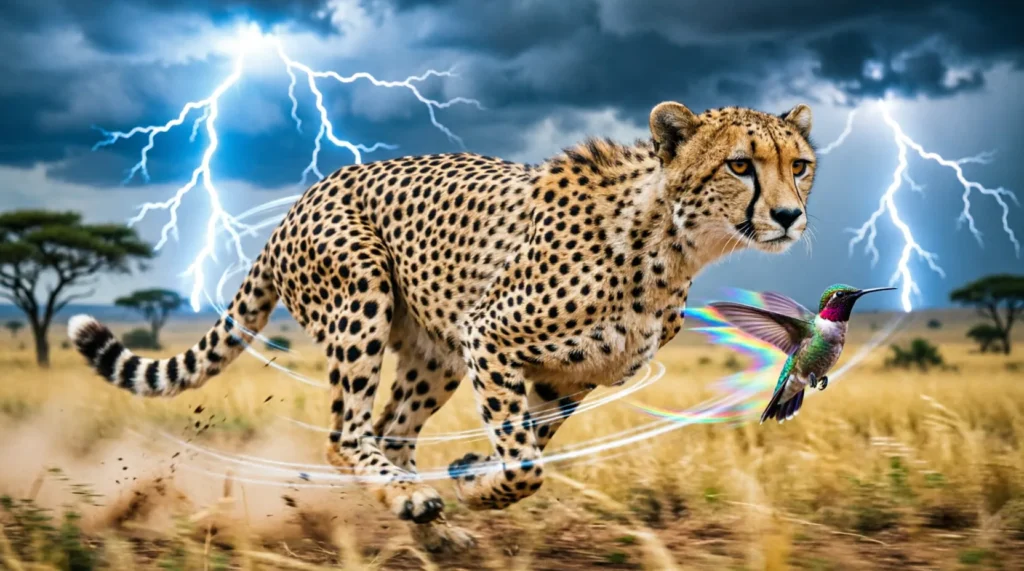
When you need to describe speed, “fast” often feels flat. It tells the reader what happened but doesn’t make them feel the rush of air or the blur of motion. A strong simile for as quick as transforms a simple action into a vivid experience. The examples below are categorized by context—nature, animals, machinery, and abstract concepts—so you can find the perfect comparison for your specific scene. Use these to inject immediacy and rhythm into your sentences, ensuring your readers keep pace with your narrative.
What Is a Simile?
A simile is a figure of speech that directly compares two different things using the words “like” or “as” Simile. Unlike a metaphor, which states that one thing is another, a simile maintains the distinction between the two elements while highlighting a shared characteristic. For instance, saying “he is a cheetah” is a metaphor; saying “he ran as quick as a cheetah” is a simile. This structural difference allows similes to be more explicit in their comparison, making them ideal for clarifying complex sensations or actions for your audience.
Nature’s Velocity: Wind, Water, and Light
Nature provides some of the most universally understood benchmarks for speed. These comparisons work well because they evoke sensory experiences everyone has felt, from the sting of a cold gust to the flash of lightning.
- “as quick as lightning” — “The decision was made as quick as lightning.” (instantaneous, decisive). This is a classic for a reason; it captures both speed and suddenness. However, it is heavily overused. If you use it, ensure the context justifies the cliché, or try “as quick as a lightning strike” for a slightly fresher rhythm.
- “as quick as the wind” — “She moved as quick as the wind through the tall grass.” (fluid, unstoppable). This works best when the movement is smooth rather than jerky. It suggests an ease of motion that defies resistance.
- “as quick as a flash” — “His apology came as quick as a flash.” (brief, surprising). Ideal for moments that happen and disappear before anyone can process them. It implies brevity as much as speed.
- “as quick as a shooting star” — “Her fame rose as quick as a shooting star.” (spectacular, fleeting). This adds a layer of transience. It’s not just fast; it’s fast and gone. Use this for events that burn bright and vanish.
- “as quick as a river current” — “The news spread as quick as a river current.” (powerful, directional). This suggests momentum. It’s not just speed; it’s speed with force behind it, carrying everything along with it.
- “as quick as falling rain” — “Tears came as quick as falling rain.” (natural, inevitable). This is softer than the wind or lightning. It works well for emotional releases or natural processes that cannot be halted.
- “as quick as a shadow” — “He slipped away as quick as a shadow.” (silent, elusive). This emphasizes stealth alongside speed. It’s perfect for characters who want to avoid detection.
- “as quick as a sunrise” — “Hope returned as quick as a sunrise.” (gradual but inevitable). While sunrises aren’t instant, the transition from dark to light can feel rapid in narrative time. This works for positive shifts.
Animal Instincts: Predators and Prey
Animal similes tap into our primal understanding of survival. They convey not just speed, but intent. A predator moves quickly to catch; prey moves quickly to survive. Choosing the right animal sets the tone for the character’s motivation.
- “as quick as a cat” — “She reacted as quick as a cat.” (agile, reflexive). Cats are known for their balance and sudden bursts of energy. This is excellent for physical reactions or dodging obstacles.
- “as quick as a snake” — “His excuse came as quick as a snake.” (slick, dangerous). Snakes strike with terrifying speed. This simile carries a negative connotation, suggesting deceit or threat alongside velocity.
- “as quick as a deer” — “He bolted as quick as a deer.” (startled, graceful). Deer move with a bounding elegance. Use this when the speed is driven by fear or surprise rather than aggression.
- “as quick as a hawk” — “Her eyes scanned the room as quick as a hawk.” (focused, predatory). This isn’t about running; it’s about perception. It works for mental speed or observational sharpness.
- “as quick as a rabbit” — “He disappeared into the crowd as quick as a rabbit.” (nervous, erratic). Rabbits dart unpredictably. This is ideal for chaotic movement or escape attempts.
- “as quick as a wolf” — “They closed in as quick as a wolf pack.” (coordinated, relentless). This emphasizes group dynamics. It’s not just one person moving fast; it’s a unified, threatening advance.
- “as quick as a hummingbird” — “Her hands worked as quick as a hummingbird’s wings.” (frenetic, precise). Hummingbirds beat their wings incredibly fast. This is perfect for detailed, rapid manual tasks.
- “as quick as a gazelle” — “She ran as quick as a gazelle.” (effortless, enduring). Gazelles combine speed with stamina. Use this for long-distance running or sustained effort.
Mechanical and Modern Speed
In contemporary settings, natural analogies sometimes feel out of place. Mechanical similes ground the description in the modern world, appealing to readers familiar with technology and urban life.
- “as quick as a bullet” — “The answer left his mouth as quick as a bullet.” (dangerous, direct). Bullets are lethal and irreversible. This simile adds weight to words or actions that cannot be taken back.
- “as quick as a heartbeat” — “Change happened as quick as a heartbeat.” (internal, vital). This connects speed to life itself. It’s intimate and rhythmic, suitable for emotional or physiological changes.
- “as quick as a thought” — “She understood as quick as a thought.” (mental, instantaneous). This is the gold standard for cognitive speed. It suggests no lag between stimulus and comprehension.
- “as quick as a click” — “The deal was done as quick as a click.” (digital, effortless). In the digital age, a mouse click is the unit of immediate action. It feels modern and frictionless.
- “as quick as a spark” — “Anger flared as quick as a spark.” (igniting, small start). Sparks are tiny but lead to fires. This works for emotions or events that start small but grow rapidly.
- “as quick as a shutter” — “The memory vanished as quick as a shutter closing.” (mechanical, final). Camera shutters open and close instantly. This is great for moments of realization or loss of visibility.
- “as quick as a text message” — “His reply came as quick as a text message.” (modern, expected). This sets a contemporary baseline. It implies that the speed is normal for the medium.
- “as quick as a download” — “The information transferred as quick as a download.” (technical, bulk). This works for large amounts of data or knowledge being absorbed rapidly.
Abstract and Emotional Swiftness
Sometimes speed isn’t physical. It’s emotional, intellectual, or temporal. These similes help describe the intangible rushes that define human experience.
- “as quick as a glance” — “Recognition came as quick as a glance.” (superficial, immediate). Glances are brief by definition. This works for shallow understanding or instant attraction.
- “as quick as a whisper” — “Secrets spread as quick as a whisper.” (quiet, pervasive). Whispers travel fast in quiet rooms. This suggests secrecy and intimacy alongside speed.
- “as quick as a dream” — “The vacation ended as quick as a dream.” (illusory, dissolving). Dreams feel long but vanish upon waking. This captures the subjective distortion of time.
- “as quick as a sigh” — “Resignation settled in as quick as a sigh.” (relieved, exhaling). A sigh is a release of breath. It’s slow in execution but quick in effect. It marks a shift in emotional state.
- “as quick as a blink” — “The opportunity passed as quick as a blink.” (missed, involuntary). Blinking is automatic. This suggests that the speed was beyond conscious control, leading to regret.
- “as quick as a rumor” — “News traveled as quick as a rumor.” (unverified, social). Rumors move faster than facts. This adds a layer of skepticism or social dynamics to the speed.
- “as quick as a pulse” — “Fear spiked as quick as a pulse.” (rhythmic, biological). Like a heartbeat, but specifically emphasizing the spike. It’s visceral and bodily.
- “as quick as a memory” — “Nostalgia hit as quick as a memory.” (unexpected, vivid). Memories can ambush us. This works for sudden emotional recalls triggered by sensory details.
How to Write Your Own “As Quick As” Simile
Creating original similes requires observing the world with a writer’s eye. Here is a simple three-step process to generate your own comparisons.
First, identify the specific type of speed. Is it violent? Gentle? Mental? Physical? “Quick” is a broad term. Narrow it down. If your character is stealing a cookie, the speed is sneaky. If they are dodging a ball, the speed is reactive.
Second, brainstorm objects or entities that embody that specific quality. Don’t just think of fast things; think of things that are fast in that way. For sneaky speed, think of shadows, mice, or smoke. For reactive speed, think of springs, traps, or reflexes.
Third, test the rhythm. Say the simile aloud. “As quick as a mouse” has a different cadence than “as quick as a scurrying mouse.” The latter is more descriptive but clunkier. Aim for brevity. The best similes are punchy. For example, if I’m describing a thief, I might start with “as quick as a shadow.” But if I want to emphasize the silence, I might refine it to “as quick as a shadow slipping under a door.” The added detail makes it unique to the scene.
Frequently Asked Questions
What is the difference between “as quick as” and “as fast as”? While often used interchangeably, “quick” usually refers to the time taken to complete an action (responsiveness), while “fast” refers to the rate of motion (velocity). “As quick as a thought” works because thinking is responsive. “As fast as a car” works because cars have high velocity. Choose based on whether you’re emphasizing duration or speed.
Are animal similes always effective? No. Animal similes can feel clichéd if overused. “As quick as a fox” or “as quick as a hare” are so common they may not register with readers. To make them effective, add specific details. Instead of “as quick as a fox,” try “as quick as a fox spotting a hunter.” Context revitalizes stale comparisons.
Can I use similes for negative speed? Absolutely. Speed isn’t always positive. “As quick as a disaster” or “as quick as a mistake” can convey how rapidly things go wrong. These similes create tension and urgency, warning the reader that the situation is deteriorating rapidly.
How do I avoid mixing metaphors and similes? Keep your comparison consistent. If you start with “as quick as,” stick to the “as…as” structure. Do not switch to “like” in the same sentence unless you are creating a deliberate stylistic effect. Consistency ensures clarity. According to Quick, the concept of quickness involves both time and agility, so ensure your simile reflects both if possible.

Justin Brown is a seasoned literary analyst with over 15 years of experience in the field of linguistics and literary studies. Holding a master’s degree in English Literature from the University of Chicago, Justin has devoted much of his career to exploring the nuances of similes and other forms of figurative language. His passion for deciphering the layers of meaning in literary works was kindled during his undergraduate years, where he was intrigued by the power of metaphorical language. Justin frequently contributes to VividSimiles by crafting engaging articles that decode the application of similes in both classical and contemporary literature. His insightful analyses help readers grasp the beauty and complexity of figurative expressions, making literature more accessible to all. In addition to writing, Justin conducts workshops for aspiring writers, nurturing their abilities to use language vividly and effectively.