

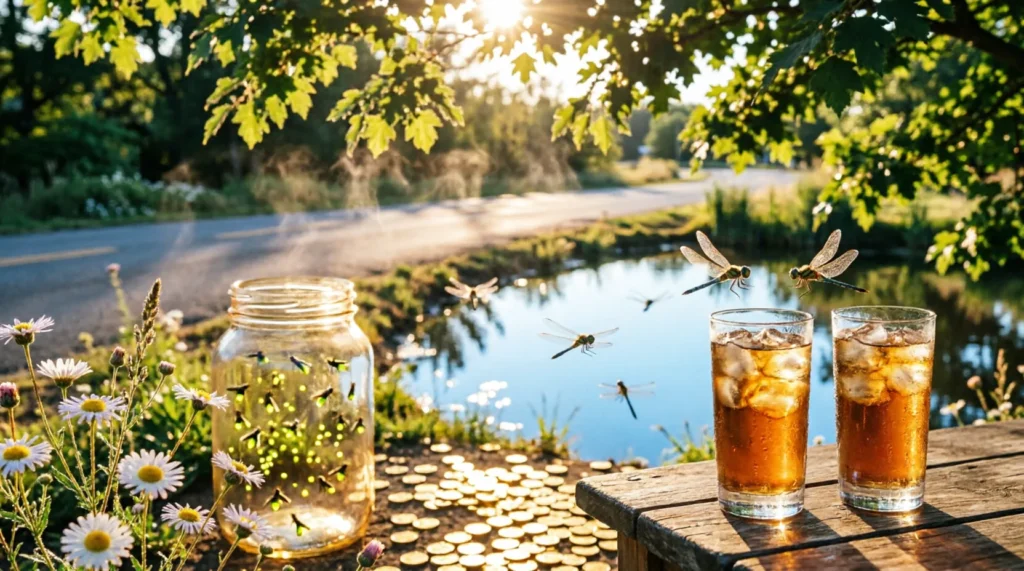
Summer is not just a season; it is a sensory overload that demands precise language. When you describe the oppressive weight of July humidity or the golden haze of an August afternoon, generic adjectives like “hot” or “bright” fail to capture the experience. Similes and metaphors allow you to translate physical sensations into emotional resonance, helping your reader feel the stickiness of the air or hear the drone of cicadas. The examples below are categorized by theme so you can find the exact figurative comparison needed for your narrative, whether you are writing a nostalgic memoir or a tense thriller set in the dog days.
What Is a Simile?
A simile is a figure of speech that directly compares two different things using the words “like” or “as.” Unlike a metaphor, which asserts that one thing is another, a simile maintains the distinction between the two entities while highlighting their shared characteristics. According to Simile, this explicit comparison allows readers to visualize abstract concepts through concrete, familiar imagery. For instance, saying “the heat was like a blanket” creates a specific tactile image that “the heat was heavy” does not. While metaphors offer a more immersive identification, similes provide clarity and often a sense of observational distance that works well in descriptive prose.
The Physical Sensation of Heat
When describing temperature, avoid the cliché “hot as hell.” It is overused and lacks specificity. Instead, focus on how the heat interacts with the body and the environment. Is it dry and prickly? Is it wet and suffocating? These distinctions matter for setting the mood.
- “The air hung like a wet wool coat.” — “We stepped outside and the air hung like a wet wool coat, heavy and smelling of damp earth.” (Oppressive, uncomfortable). This works because it invokes a specific, universally disliked texture.
- “The sun beat down like a hammer on an anvil.” — “By noon, the sun beat down like a hammer on an anvil, driving us back into the shade.” (Relentless, painful). The auditory component of “hammer” adds violence to the visual heat.
- “Sweat clung to my skin like second-hand glue.” — “After ten minutes of gardening, sweat clung to my skin like second-hand glue.” (Sticky, irritating). This simile captures the unpleasant persistence of summer perspiration.
- “The pavement shimmered like a mirage.” — “Looking down the empty street, the pavement shimmered like a mirage, distorting the horizon.” (Visual distortion, disorienting).
- “The heat pressed against us like a physical weight.” — “Walking from the car to the house, the heat pressed against us like a physical weight.” (Crushing, exhausting).
- “The breeze felt like breath from an open oven.” — “Even the evening breeze felt like breath from an open oven, offering no relief.” (Dry, hot, disappointing).
- “My shirt stuck to my back like a second skin.” — “By the time we reached the beach, my shirt stuck to my back like a second skin.” (Uncomfortable, intimate).
- “The sunlight pierced through the leaves like needles.” — “Sitting under the oak tree, the sunlight pierced through the leaves like needles, sharp and bright.” (Intense, focused).
In my workshops, I often tell students that the best heat similes involve touch rather than sight. Readers can imagine brightness easily, but they need help feeling the temperature.
Light, Color, and Visual Atmosphere
Summer light has a unique quality—it is often harsher, brighter, and more saturated than the soft light of spring or autumn. Capturing this visual intensity requires comparisons that evoke brilliance, glare, or golden hues.
- “The sky was a sheet of polished blue glass.” — “Looking up, the sky was a sheet of polished blue glass, unbroken and deep.” (Clear, vast, serene). This metaphor removes the softness of clouds, emphasizing the starkness of a clear summer day.
- “Sunlight spilled across the lawn like melted butter.” — “In the late afternoon, sunlight spilled across the lawn like melted butter, rich and golden.” (Warm, inviting, viscous). This is a favorite among my students for its sensory appeal.
- “The horizon glowed like embers in a dying fire.” — “As sunset approached, the horizon glowed like embers in a dying fire, fading from orange to ash.” (Fading, warm, transient).
- “Shadows stretched out like long, dark fingers.” — “By six o’clock, shadows stretched out like long, dark fingers, reaching across the grass.” (Eerie, elongated).
- “The water sparkled like scattered diamonds.” — “From the cliff edge, the water sparkled like scattered diamonds, blinding in the midday sun.” (Bright, valuable, sharp).
- “The moon hung like a bone chip in the black sky.” — “Late at night, the moon hung like a bone chip in the black sky, pale and stark.” (Cold, isolated). Note how this shifts the tone from warm day to cool night.
- “The fields turned gold like old parchment.” — “By August, the fields turned gold like old parchment, dry and ready for harvest.” (Aged, brittle, historical).
- “Light filtered through the trees like stained glass.” — “In the forest, light filtered through the trees like stained glass, coloring the moss in patches of green and yellow.” (Artistic, fragmented).
According to Metaphor, these comparisons transfer the qualities of one object (butter, glass, embers) to another (sunlight, sky, horizon), creating a new understanding of the subject. The key is to choose source objects that carry the right emotional weight for your scene.
Sound and Silence of the Season
Summer is rarely silent. It is filled with the drone of insects, the crash of waves, or the distant hum of lawnmowers. Conversely, the silence of a hot afternoon can be deafening. Use sound-based similes to anchor your reader in the auditory landscape.
- “The cicadas droned like a distant electric saw.” — “All afternoon, the cicadas droned like a distant electric saw, never stopping, never changing pitch.” (Annoying, mechanical, persistent). This is a strong choice because it connects nature to industrial irritation.
- “Thunder rumbled like bowling balls in the sky.” — “Suddenly, thunder rumbled like bowling balls in the sky, shaking the windows.” (Heavy, rolling, ominous).
- “The ocean crashed like a collapsing building.” — “During the storm, the ocean crashed like a collapsing building, violent and loud.” (Destructive, powerful).
- “Silence lay over the town like a thick fog.” — “At three in the morning, silence lay over the town like a thick fog, muffling all sound.” (Heavy, obscuring).
- “Wind whispered through the corn like secret keepers.” — “At dusk, wind whispered through the corn like secret keepers, rustling the stalks gently.” (Mysterious, soft).
- “Rain tapped on the roof like impatient fingers.” — “The summer storm arrived quickly, and rain tapped on the roof like impatient fingers.” (Restless, rhythmic).
- “Bees buzzed like tiny engines.” — “Around the lavender, bees buzzed like tiny engines, working tirelessly.” (Busy, mechanical).
- “The crowd roared like a breaking wave.” — “At the festival, the crowd roared like a breaking wave, overwhelming and sudden.” (Powerful, collective).
Avoid the phrase “quiet as a mouse” for summer scenes. It is too generic. Instead, compare the silence to something substantial, like fog or weight, to show how the absence of sound feels physically present.
Emotional Resonance: Nostalgia and Freedom
Summer often carries emotional baggage—childhood freedom, first loves, or the melancholy of ending vacations. These similes help convey the internal state of characters experiencing the season.
- “Freedom tasted like cold watermelon.” — “Running barefoot through the yard, freedom tasted like cold watermelon, sweet and immediate.” (Refreshing, simple, joyful). This synesthetic simile links taste to emotion effectively.
- “Memories surfaced like bubbles in soda.” — “Sitting on the porch, memories surfaced like bubbles in soda, fizzy and fleeting.” (Ephemeral, active).
- “Loneliness felt like an empty pool.” — “After everyone left, loneliness felt like an empty pool, vast and echoing.” (Hollow, exposed).
- “Joy spread through her like sunshine through a window.” — “When he smiled, joy spread through her like sunshine through a window, warm and illuminating.” (Bright, expanding).
- “Time moved like molasses in January.” — “Waiting for school to start, time moved like molasses in January, slow and sticky.” (Sluggish, frustrating). This is a classic idiom, but it remains effective for capturing boredom.
- “Excitement buzzed in his chest like a trapped bee.” — “Before the trip, excitement buzzed in his chest like a trapped bee, urgent and restless.” (Contained, energetic).
- “Regret hung in the air like smoke.” — “After the argument, regret hung in the air like smoke, choking and visible.” (Lingering, harmful).
- “Hope bloomed like a night-blooming cereus.” — “Her hope bloomed like a night-blooming cereus, rare and brief.” (Fragile, special).
When writing emotional scenes, I advise writers to match the simile to the character’s age. A child might compare joy to candy, while an adult might compare it to relief from debt. Context dictates the comparison.
Nature and Growth
Summer is the peak of biological activity. Plants grow aggressively, animals breed, and storms form rapidly. Use these similes to describe the wild, untamed aspects of the season.
- “Vines climbed the wall like greedy hands.” — “Over the summer, vines climbed the wall like greedy hands, grasping every brick.” (Aggressive, personified).
- “Flowers exploded like confetti.” — “In the garden, flowers exploded like confetti, colorful and chaotic.” (Celebratory, messy).
- “Storm clouds gathered like bruised fruit.” — “On the horizon, storm clouds gathered like bruised fruit, dark and swollen.” (Threatening, ripe). This is a particularly evocative image because it suggests both color and impending decay.
- “Grass grew like hair on a neglected head.” — “By July, the grass grew like hair on a neglected head, unruly and thick.” (Untamed, messy).
- “Roots spread like underground rivers.” — “Beneath the soil, roots spread like underground rivers, seeking water.” (Expansive, vital).
- “Pollen floated like gold dust.” — “In the wind, pollen floated like gold dust, coating everything in yellow.” (Ubiquitous, fine).
- “Trees stood like sentinels.” — “Along the road, trees stood like sentinels, watching the cars pass.” (Guarding, static).
- “Weeds choked the garden like invaders.” — “Without care, weeds choked the garden like invaders, taking over territory.” (Hostile, dominant).
These comparisons emphasize the vitality and sometimes the violence of natural growth. Summer is not passive; it is active and consuming.
How to Write Your Own Summer Simile
Creating original similes requires observation and association. Follow these three steps to craft comparisons that feel fresh and authentic.
- Identify the Core Sensation: Determine exactly what you want to convey. Is it the stickiness of humidity, the blinding nature of light, or the loudness of insects? Be specific. Instead of “it was hot,” decide if it was “dry heat” or “wet heat.”
- Brainstorm Concrete Objects: List objects that share that sensation. For “wet heat,” think of wet wool, steam rooms, or soggy paper. For “blinding light,” think of mirrors, flashbulbs, or white paint. Avoid abstract concepts like “anger” or “joy” as the source object; stick to physical things.
- Test the Comparison: Insert the simile into a sentence. Does it create a clear image? Does it fit the tone? If you are writing a horror story, “the sun shone like a happy face” will jar the reader. If you are writing a romance, “the sun shone like an interrogation lamp” might be too harsh. Adjust until the emotional tone matches.
Worked Example:
- Sensation: The sound of rain on a tin roof.
- Objects: Drumming, typing, hail, popcorn popping.
- Draft: “The rain sounded like popcorn popping.”
- Refinement: “The rain hammered the tin roof like a thousand tiny drums.” (This adds rhythm and intensity).
Frequently Asked Questions
What is the difference between a simile and a metaphor for summer? A simile uses “like” or “as” to compare summer elements to other things (e.g., “the heat was like a furnace”), while a metaphor states that one thing is another (e.g., “the heat was a furnace”). Similes are often clearer for descriptive writing, while metaphors can be more poetic and immersive.
How do I avoid clichés when writing about summer? Avoid overused comparisons such as “hot as hell,” “bright as the sun,” or “busy as a bee.” Instead, focus on specific, personal observations. Compare the heat to something unusual, like “a wet wool coat,” or the light to “melted butter.” Specificity kills clichés.
Can I use similes in academic writing about summer? Yes, but sparingly. In creative non-fiction or descriptive essays, similes can enhance engagement. However, in strict scientific or analytical papers, prioritize precise data and objective language over figurative comparisons. Use similes only if they clarify a complex concept for a general audience.
Why are sensory details important in summer similes? Summer is a highly sensory season. Readers connect more deeply with writing that appeals to touch, smell, sound, and taste, not just sight. A simile that describes how heat feels on the skin or how humidity smells creates a more immersive experience than one that only describes how bright the sun looks.

Justin Brown is a seasoned literary analyst with over 15 years of experience in the field of linguistics and literary studies. Holding a master’s degree in English Literature from the University of Chicago, Justin has devoted much of his career to exploring the nuances of similes and other forms of figurative language. His passion for deciphering the layers of meaning in literary works was kindled during his undergraduate years, where he was intrigued by the power of metaphorical language. Justin frequently contributes to VividSimiles by crafting engaging articles that decode the application of similes in both classical and contemporary literature. His insightful analyses help readers grasp the beauty and complexity of figurative expressions, making literature more accessible to all. In addition to writing, Justin conducts workshops for aspiring writers, nurturing their abilities to use language vividly and effectively.