

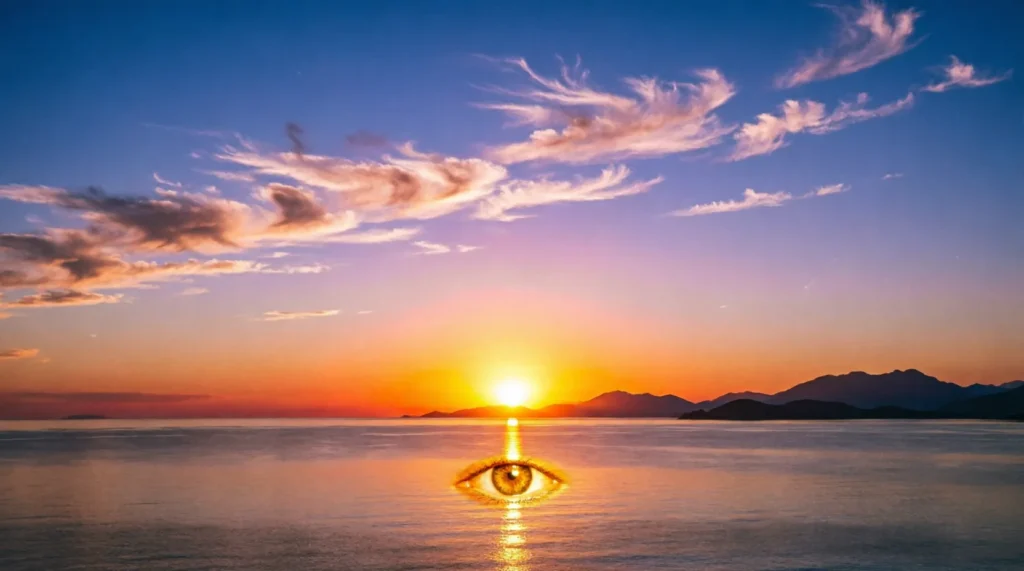
The moment the sun breaches the horizon is one of the most visually arresting events in nature, yet it is also one of the most difficult to describe without falling into cliché. Writers often reach for “like a ball of fire” or “as bright as day,” but these phrases have lost their power through overuse. To capture the specific mood of dawn—whether it is gentle, violent, hopeful, or indifferent—you need similes that engage the senses and evoke emotion rather than just stating a fact. The examples below are categorized by tone and intensity, providing you with ready-to-use comparisons that fit seamlessly into narrative prose, poetry, or descriptive essays. Each entry includes a context sentence and a brief note on its tonal impact, allowing you to select the precise shade of light your scene requires.
Gentle and Hopeful Dawns
These similes work best when the rising sun represents renewal, peace, or a soft beginning. They avoid harsh brightness in favor of warmth and gradual illumination. I often tell my students that if the character is waking up feeling safe, the light should feel like an embrace, not an interrogation.
- “like a shy guest knocking softly” — “The light crept across the floorboards like a shy guest knocking softly.” (tentative, quiet). This works because it personifies the light as hesitant, matching a scene where characters are waking slowly.
- “as soft as spun sugar” — “The morning glow was as soft as spun sugar, dissolving the night’s shadows.” (sweet, delicate). The texture of spun sugar implies something fragile and delightful, perfect for romantic or nostalgic openings.
- “like a warm breath on cold glass” — “Dawn spread over the valley like a warm breath on cold glass.” (intimate, clearing). This simile connects the visual clearing of fog with the physical sensation of warmth, engaging two senses at once.
- “as gentle as a mother’s hand” — “The sunrise touched the hills as gentle as a mother’s hand.” (comforting, protective). It establishes an immediate emotional safety net for the reader.
- “like watercolor bleeding into paper” — “Pink and gold mixed in the sky like watercolor bleeding into paper.” (artistic, fluid). This captures the lack of hard lines in early dawn, appealing to visual artists or observant narrators.
- “as quiet as a held breath” — “The world waited, the sunrise as quiet as a held breath.” (suspenseful, still). Use this when the calm before the action is more important than the light itself.
- “like a slow-opening eye” — “The horizon widened like a slow-opening eye.” (aware, awakening). This suggests the world is becoming conscious, which is ideal for scenes involving realization or epiphany.
Violent and Dramatic Entrances
Not every sunrise is peaceful. In thrillers, war stories, or tales of natural disaster, the sun can feel intrusive, aggressive, or overwhelming. These similes treat the light as a force that demands attention, often using imagery of heat, weight, or sudden impact. According to the concept of Rising, the upward movement can imply struggle or force, which these comparisons lean into heavily.
- “like a wound tearing open” — “The sky split, the sun bursting through like a wound tearing open.” (painful, visceral). This is a strong choice for gritty realism or horror, where beauty is secondary to shock.
- “as fierce as a trumpet blast” — “Light flooded the room as fierce as a trumpet blast.” (loud, jarring). Synesthesia is powerful here; linking light to sound creates a sense of unavoidable intrusion.
- “like molten iron poured from a crucible” — “The horizon glowed like molten iron poured from a crucible.” (industrial, dangerous). This evokes heat and weight, suitable for settings involving factories, deserts, or intense labor.
- “as abrupt as a slap” — “Daylight hit his face as abrupt as a slap.” (shocking, unwelcome). Use this when the character does not want to wake up or face the day.
- “like a wildfire catching dry grass” — “Orange flames raced across the clouds like a wildfire catching dry grass.” (fast, uncontrollable). This emphasizes speed and the potential for destruction, even in a beautiful scene.
- “as heavy as a wet blanket” — “The morning light settled on the city as heavy as a wet blanket.” (oppressive, stifling). This subverts the usual “lightness” of dawn, creating a mood of dread or exhaustion.
- “like a judge’s gavel striking down” — “The sun rose like a judge’s gavel striking down, ending the night’s reprieve.” (authoritative, final). This works well in legal dramas or stories about consequences arriving.
Ethereal and Magical Light
When writing fantasy, magical realism, or high romance, the sunrise often transcends physics. These similes focus on the impossible, the glittering, or the divine. They suggest that the light has properties beyond mere illumination, such as value, magic, or otherworldly origin.
- “like shattered diamonds scattering” — “The frost sparkled under the sun like shattered diamonds scattering.” (precious, sharp). This highlights the reflective quality of ice or dew, adding a touch of luxury to the scene.
- “as ancient as the first prayer” — “The golden light felt as ancient as the first prayer.” (spiritual, timeless). This connects the daily event to human history and devotion, adding gravitas.
- “like a veil of gold thread” — “Mist hung in the air, woven through with sunlight like a veil of gold thread.” (intricate, delicate). This focuses on the texture of the light interacting with the atmosphere.
- “as mysterious as a whispered secret” — “The dawn arrived as mysterious as a whispered secret.” (intimate, hidden). Use this when the characters are hiding something or when the setting holds clues.
- “like a phoenix unfolding its wings” — “The colors expanded like a phoenix unfolding its wings.” (mythical, rebirth). A classic mythological reference that signals major transformation or resurrection.
- “as clear as a bell’s ring” — “The air was crisp, the sunrise as clear as a bell’s ring.” (pure, resonant). This simile appeals to the clarity of the atmosphere, suggesting a perfect, untouched moment.
- “like stardust settling on earth” — “The morning dew shimmered like stardust settling on earth.” (cosmic, magical). This elevates the mundane ground to something celestial, fitting for fantasy narratives.
Melancholic and Fading Nights
Sometimes the sunrise is not a welcome sight. For insomniacs, mourners, or those facing bad news, the arrival of day can feel like an end to privacy or comfort. These similes frame the sun as an intruder or a reminder of reality returning.
- “like a harsh fluorescent bulb flickering on” — “The gray light filled the kitchen like a harsh fluorescent bulb flickering on.” (clinical, unflattering). This strips away romance, leaving only the stark reality of the morning.
- “as cold as a stranger’s glance” — “The winter sun rose as cold as a stranger’s glance.” (distant, unfeeling). Perfect for urban settings or emotional isolation.
- “like a spotlight finding a criminal” — “Dawn broke over the alley like a spotlight finding a criminal.” (exposing, guilty). This creates immediate tension, suggesting someone has something to hide.
- “as inevitable as a debt coming due” — “The morning came as inevitable as a debt coming due.” (burdensome, unavoidable). This frames the passage of time as a financial or moral obligation.
- “like a pale ghost lingering” — “The sun remained low, like a pale ghost lingering after the party.” (weak, residual). Use this for overcast days or mornings where the energy is drained.
- “as sad as a forgotten letter” — “The light filtered through the dust as sad as a forgotten letter.” (nostalgic, neglected). This imbues the physical environment with emotional decay.
How to Write Your Own Sunrise Simile
Creating a fresh comparison requires moving beyond the visual. Most writers stop at “it looked like,” but the strongest similes engage memory, touch, or sound. Here is a simple three-step process I use in workshops to help students break out of generic descriptions.
First, identify the emotional core of the scene. Is the character dreading the day? Are they hopeful? The simile must match the character’s internal state, not just the external weather. If they are anxious, the sun might be “like a ticking clock.” If they are in love, it might be “like a smile breaking through.”
Second, choose a sensory anchor unrelated to sight. Think about temperature, sound, or texture. Instead of saying the sun was bright, ask yourself: What does that brightness feel like? Does it feel like hot tea? Like a loud noise? Like rough sandpaper? This cross-sensory mapping creates novelty.
Third, test for specificity. Replace general nouns with specific ones. Change “like a flower opening” to “like a tulip snapping open.” Change “like fire” to “like a match struck in a dark room.” The more specific the image, the more vivid the reader’s experience.
Worked Example:
- Weak: The sun rose like a bright light.
- Step 1 (Emotion): The character is tired and reluctant.
- Step 2 (Sensory Anchor): It feels heavy and intrusive, like a weight.
- Step 3 (Specificity): The sun rose like a lead curtain dropping on a stage.
Frequently Asked Questions
What is the difference between a simile and a metaphor when describing the sun? A simile explicitly compares two things using “like” or “as,” such as “the sun was like a coin.” A metaphor states that one thing is another, such as “the sun was a golden coin.” Similes are often safer for subtle descriptions, while metaphors create stronger, more direct identifications. Understanding the definition of a Simile helps clarify that the comparative element is what distinguishes it from other figurative language.
How do I avoid clichés when writing about sunrise? Avoid comparing the sun to common objects like balls, eggs, or generic fire. Instead, focus on unique interactions between the light and the environment. Describe how the light hits specific textures—rust, water, skin—or how it changes the temperature of the air. Specificity is the enemy of cliché.
Can similes for sunrise be negative? Absolutely. While sunrise is often associated with hope, it can also represent exposure, the end of rest, or the return of pain. Using similes like “like a harsh interrogator’s lamp” can effectively convey a character’s dread or discomfort with the new day.
Why are similes more effective than adjectives for describing light? Adjectives like “bright” or “golden” tell the reader what to think, but similes show the reader how to feel. By comparing the light to a familiar experience, such as “warm milk” or “shattered glass,” you engage the reader’s memory and sensory imagination, creating a deeper emotional connection to the scene.

Brian Walker is an esteemed linguist with a Ph.D. in Language and Literature from Stanford University. Over the past 20 years, Brian has dedicated his research to understanding the impact of figurative language on communication and literature. His extensive body of work includes scholarly articles that have been published in numerous academic journals. Brian’s fascination with similes emerged during his doctoral studies, where he examined their role in enhancing rhetorical persuasion and emotional resonance. As a contributor to VividSimiles, he writes detailed analyses on the historical evolution of similes and their varied applications across different cultures and languages. Brian’s articles are known for their depth and clarity, bridging the gap between academic research and practical application. He is committed to enlightening readers about the intricacies of language and the beauty of well-crafted similes.