

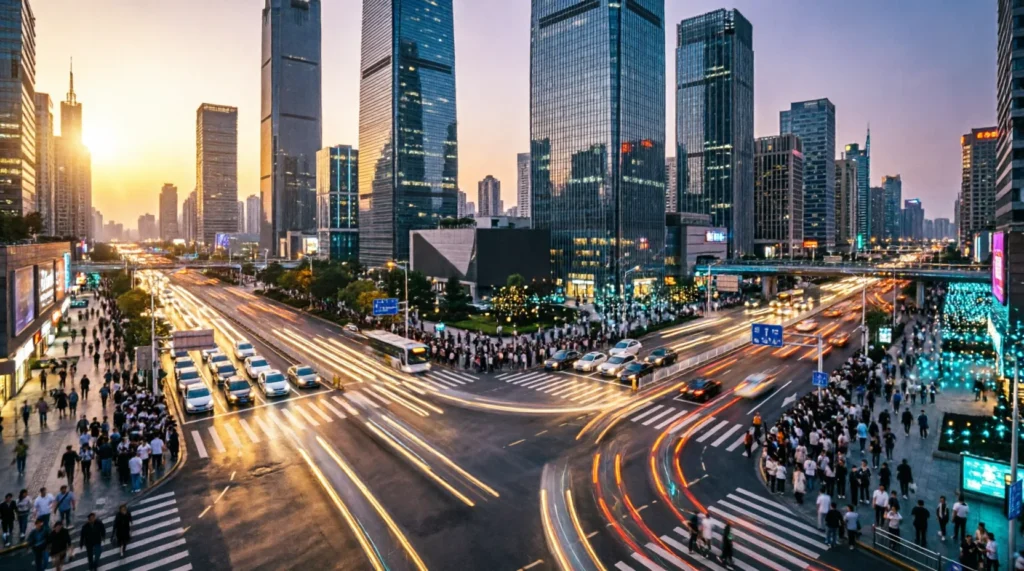
When you try to describe a metropolis in motion, generic adjectives like “loud” or “crowded” rarely do the job. They tell the reader what is happening, but they don’t make the reader feel the vibration of the pavement or the claustrophobia of the rush hour crush. Similes bridge that gap. By comparing the city’s energy to something tangible—a hive, a storm, a machine—you create an immediate sensory anchor for your audience.
The list below offers a curated collection of similes specifically designed for urban environments. I have organized them by theme so you can find the right tone, whether you are writing a gritty noir scene, a romantic travelogue, or a frantic action sequence. Each entry includes a sample sentence and a note on its emotional resonance, helping you choose the comparison that best fits your narrative voice.
The Mechanical Metropolis
Cities are often described as living organisms, but in my experience, they function more like complex, overheating machinery. These similes emphasize the relentless, unfeeling nature of urban infrastructure and the people who power it.
- “like a clockwork engine” — “The subway system ran like a clockwork engine, precise and unforgiving.” (efficient, cold)
- “as loud as a factory floor” — “The intersection was as loud as a factory floor during peak shift.” (industrial, overwhelming)
- “like gears grinding together” — “Traffic moved like gears grinding together, slow and painful.” (friction, stagnation)
- “as relentless as a conveyor belt” — “The crowd pushed forward as relentless as a conveyor belt.” (inevitable, dehumanizing)
- “like a circuit board sparking” — “Nightlife flickered across the district like a circuit board sparking.” (electric, erratic)
- “as rigid as steel girders” — “The schedule was as rigid as steel girders, allowing no deviation.” (unyielding, structured)
- “like a piston firing” — “His heart beat like a piston firing against his ribs.” (mechanical intensity)
- “as noisy as a construction site” — “The morning commute was as noisy as a construction site at dawn.” (chaotic, abrasive)
Craft Note: The “clockwork engine” simile works because it implies precision without warmth. It suggests that if one part fails, the whole system collapses, which adds underlying tension to your scene. Avoid overusing “busy as a bee” here; it feels too pastoral for concrete jungles.
The Natural Force
Sometimes the city feels less like a machine and more like a weather event or a wild ecosystem. These comparisons highlight the uncontrollable, swirling energy of urban life. According to Wikipedia, a simile explicitly uses “like” or “as” to draw these connections, allowing readers to map familiar natural phenomena onto unfamiliar urban chaos.
- “like a swarm of bees” — “Pedestrians clustered around the entrance like a swarm of bees.” (dense, buzzing)
- “as chaotic as a hurricane” — “The protest turned the square as chaotic as a hurricane.” (destructive, wild)
- “like a river in flood” — “Traffic flowed down the avenue like a river in flood.” (overwhelming, fluid)
- “as bright as lightning” — “Neon signs flashed as bright as lightning in the storm.” (sudden, blinding)
- “like a forest canopy” — “Skyscrapers rose above us like a forest canopy, blocking the sun.” (looming, naturalistic)
- “as deep as the ocean” — “The noise of the city was as deep as the ocean, constant and pressing.” (immersive, heavy)
- “like a wildfire spreading” — “Rumors moved through the office like a wildfire spreading.” (fast, dangerous)
- “as unpredictable as thunder” — “The street performer’s act was as unpredictable as thunder.” (startling, raw)
Craft Note: Comparing traffic to a “river in flood” is effective because it captures both the volume and the lack of individual agency. People aren’t walking; they are being carried. This removes intent from the characters, which is useful for scenes where they feel powerless against their environment.
The Sensory Overload
A busy city assaults the senses. These similes focus on the sheer volume of input—visual, auditory, and tactile—that defines the urban experience. They are particularly useful for establishing mood in opening chapters or descriptive passages.
- “like a kaleidoscope spinning” — “The market stalls blurred together like a kaleidoscope spinning.” (dizzying, colorful)
- “as sharp as shattered glass” — “The sirens cut through the air as sharp as shattered glass.” (painful, piercing)
- “like a static-filled radio” — “The conversation was lost in the crowd like a static-filled radio.” (unclear, frustrating)
- “as thick as fog” — “The humidity hung over the plaza as thick as fog.” (oppressive, visible)
- “like a drum solo” — “Construction work pounded the street like a drum solo.” (rhythmic, aggressive)
- “as dizzying as a carousel” — “The lights of Times Square were as dizzying as a carousel.” (disorienting, fun)
- “like a cacophony of birds” — “Morning traffic sounded like a cacophony of birds.” (chaotic, high-pitched)
- “as blinding as a spotlight” — “The billboard was as blinding as a spotlight in a dark theater.” (focused, intense)
Craft Note: The “shattered glass” simile for sirens is strong because it invokes a physical sensation of pain. It moves beyond hearing into feeling, which creates a more visceral reaction in the reader. Use this when you want the character to feel physically attacked by the environment.
The Human Hive
At its core, a city is defined by its density of people. These similes explore the social dynamics of crowds, focusing on anonymity, connection, and the strange intimacy of strangers packed together. The concept of being busy in an urban context often refers to this high-density interaction rather than just activity levels.
- “like ants in a colony” — “Commuters scurried across the crosswalk like ants in a colony.” (small, purposeful)
- “as close as sardines” — “We stood on the train as close as sardines.” (cramped, uncomfortable)
- “like a murmuration of starlings” — “The crowd shifted direction like a murmuration of starlings.” (fluid, collective)
- “as isolated as islands” — “Despite the crowd, she felt as isolated as islands in the sea.” (lonely, detached)
- “like a tapestry woven tight” — “The community was like a tapestry woven tight, intricate and strong.” (connected, complex)
- “as fleeting as shadows” — “Faces passed by as fleeting as shadows in the evening.” (temporary, ghostly)
- “like a puzzle with missing pieces” — “The neighborhood felt like a puzzle with missing pieces.” (incomplete, confusing)
- “as synchronized as a dance” — “The rush hour flow was as synchronized as a dance.” (coordinated, graceful)
Craft Note: “Sardines” is a cliché, but it remains a cliché because it is instantly understood. However, if you want to elevate your writing, try “murmuration of starlings.” It suggests a beautiful, terrifying unity that “sardines” lacks. It implies the crowd has a mind of its own.
How to write your own city simile
Creating fresh comparisons requires looking past the obvious. Here is a simple three-step process I use with my students to generate original similes for urban settings.
- Identify the specific sensation. Don’t just say “it was busy.” Ask yourself: Was it loud? Fast? Hot? Claustrophobic? Pinpoint the dominant sensory detail.
- Find a non-urban counterpart. Look for an object or phenomenon in nature, machinery, or daily life that shares that specific trait. If the city is hot and stifling, think of an oven, a desert, or a sauna.
- Refine the connector. Use “like” or “as” to bridge the two. Test the rhythm. Does it sound natural when spoken aloud?
Worked Example:
- Sensation: The subway is hot, smelly, and crowded.
- Counterpart: A locker room after a game.
- Simile: “The subway car smelled like a locker room after a championship game.”
This works because it evokes a specific, universally understood odor and atmosphere without using generic words like “bad” or “strong.”
Frequently Asked Questions
What is the difference between a simile and a metaphor when describing a city? A simile uses “like” or “as” to compare two things (e.g., “The city is like a beast”), while a metaphor states that one thing is another (e.g., “The city is a beast”). Similes are often safer for descriptive clarity, while metaphors can feel more assertive and poetic.
Why should I avoid clichés like “busy as a bee”? Clichés lose their impact because readers have seen them too many times. They fail to create a unique image in the reader’s mind. Instead of “busy as a bee,” try “busy as a server during the dinner rush” to create a more specific, modern, and relatable image.
Can similes help with pacing in a story? Yes. Short, sharp similes (e.g., “fast as a whip”) can speed up the reading pace, while longer, more complex similes (e.g., “slow as molasses in winter”) can slow the reader down. Choose the length and complexity of your simile to match the tempo of the scene.
How many similes should I use in a single paragraph? Use sparingly. One strong simile per paragraph is usually enough to anchor the imagery. Overloading a paragraph with multiple comparisons can confuse the reader and dilute the impact of each individual image. Quality always beats quantity.

Jennifer Martinez is a creative writer and educator with a deep love for similes and figurative language. With a degree in Creative Writing from New York University and over a decade of teaching experience in high schools, Jennifer has a unique ability to explain complex concepts in simple terms. Her journey into the world of figurative language began with her own writing, where she noticed how similes and metaphors could transform the mundane into the extraordinary. At VividSimiles, Jennifer shares her expertise by writing thought-provoking essays and guides on how similes enhance storytelling. Her content often focuses on helping writers of all levels hone their style by incorporating figurative language effectively. In her spare time, Jennifer enjoys reading poetry and experimenting with new forms of expression in her own work.