

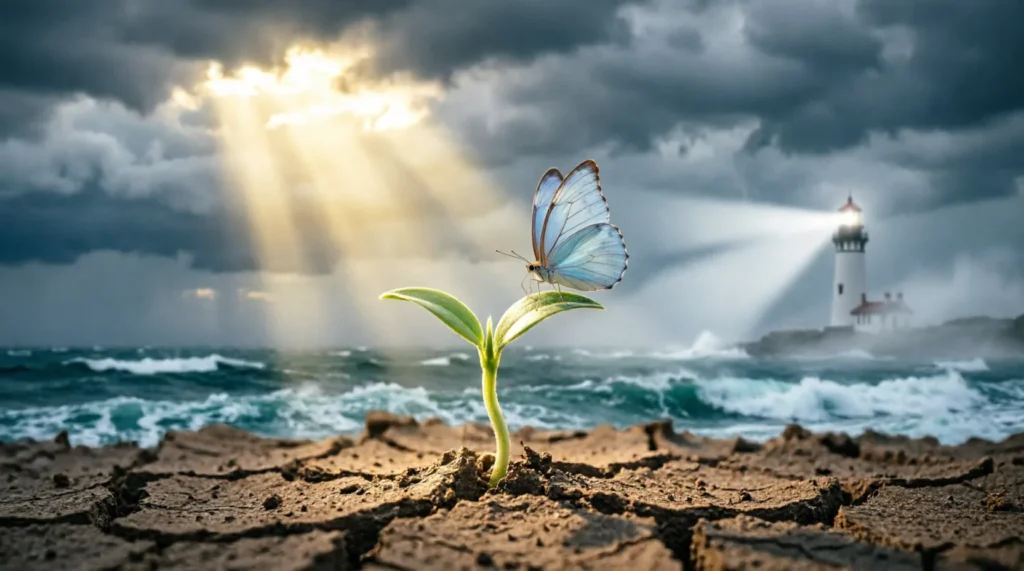
Hope is not a static state; it is a movement. It is the breath held before the dive, the green shoot cracking the pavement, the single candle in a cavernous room. When we write about hope, we are rarely describing a feeling of pure joy. More often, we are describing resilience, anticipation, or the stubborn refusal to surrender to despair.
The similes and metaphors below are designed to help you capture that specific texture. Whether you are drafting a memoir about recovery, a speech for a difficult time, or a novel where your protagonist faces impossible odds, these comparisons will give your abstract emotion a physical form. Use them to ground your reader in the sensory experience of waiting for something better.
The Anatomy of Figurative Language
Before we dive into the examples, it helps to understand the mechanics of what we are building. A simile explicitly compares two things using “like” or “as.” It creates a bridge between the known and the unknown. According to Wikipedia, this figure of speech allows writers to highlight specific qualities by linking them to familiar objects or actions.
A metaphor, by contrast, asserts that one thing is another. It is more direct and often more potent because it removes the comparative distance. As noted in the entry on Metaphor, this device can create a stronger emotional impact by fusing the subject and the image together. In this guide, I will focus primarily on similes for their clarity and ease of use, but I will also include powerful metaphors where the direct equation serves the emotion better.
Hope as Light and Dawn
Light is the most common vehicle for hope because it physically dispels darkness. However, “hope is like a light” is a cliché that has lost its power through overuse. To make this work, you must be specific about the type of light. Is it harsh? Gentle? Flickering? Blinding?
- “Hope was like the first gray hint of dawn before the sun actually breaks.” — “He stared at the horizon, knowing hope was like the first gray hint of dawn before the sun actually breaks.” (Anticipatory, subtle).
- “Her optimism burned like a flare in a pitch-black forest.” — “Even when the team failed, her optimism burned like a flare in a pitch-black forest.” (Urgent, visible from afar).
- “Hope flickered like a candle in a drafty hallway.” — “His confidence wavered, and hope flickered like a candle in a drafty hallway.” (Fragile, requiring protection).
- “The news hit him like sunlight through a cracked blind.” — “After months of bad reports, the news hit him like sunlight through a cracked blind.” (Sudden, piercing, limited).
- “Her faith glowed like embers under ash.” — “They thought she had given up, but her faith glowed like embers under ash.” (Hidden, retaining heat, ready to reignite).
- “Hope shone like a lighthouse beam cutting through fog.” — “In the confusion of the scandal, the truth shone like a lighthouse beam cutting through fog.” (Guiding, penetrating obscurity).
Craft Note: The “embers under ash” simile works because it implies history. Embers don’t appear from nowhere; they are the remnants of a previous fire. This suggests that hope is often a continuation of past passion, not a new invention.
Hope as Nature and Growth
Nature provides endless metaphors for hope because it operates on cycles. Winter always yields to spring; seeds always seek the sun. These similes are particularly effective in stories about long-term struggle, healing, or generational change. They suggest that hope is a natural law, not just a personal choice.
- “Hope sprouted like weeds through concrete.” — “Despite the poverty, hope sprouted like weeds through concrete.” (Persistent, unstoppable, slightly messy).
- “His ambition grew like ivy, covering every wall.” — “Over the summer, his ambition grew like ivy, covering every wall.” (Expansive, clinging, potentially overwhelming).
- “Hope returned like the tide after a storm.” — “She waited on the beach, knowing hope would return like the tide after a storm.” (Cyclical, inevitable, cleansing).
- “Her spirit unfolded like a fern in the rain.” — “When he finally apologized, her spirit unfolded like a fern in the rain.” (Gradual, responsive to care, organic).
- “Hope stood like an oak in a hurricane.” — “While others panicked, his hope stood like an oak in a hurricane.” (Sturdy, rooted, immovable).
- “The idea bloomed like a night-blooming cereus.” — “For years nothing happened, then the idea bloomed like a night-blooming cereus.” (Rare, sudden, spectacular).
Craft Note: Avoid the generic “flower blooming” unless you specify the flower. A dandelion suggests resilience in poor conditions; a rose suggests beauty with pain (thorns); a cactus suggests survival in harsh environments. Specificity breeds authenticity.
Hope as Physical Objects and Anchors
Sometimes hope is not expansive; it is small, heavy, and tangible. It is something you hold onto when everything else is slipping away. These similes are ideal for scenes of high tension, survival, or grief, where hope is a tool rather than a feeling.
- “Hope felt like a stone in his pocket.” — “He touched it constantly, hoping it was real; hope felt like a stone in his pocket.” (Solid, comforting weight, private).
- “Her promise was like a lifeline thrown across a chasm.” — “In the negotiation, her promise was like a lifeline thrown across a chasm.” (Connecting, saving, tense).
- “Hope was like a key found in the dust.” — “After searching for hours, hope was like a key found in the dust.” (Small, metallic, unlocking potential).
- “His determination hung like a shield on his arm.” — “Ready for the criticism, his determination hung like a shield on his arm.” (Protective, defensive, prepared).
- “Hope sat like a compass in her hand.” — “Lost in the city, hope sat like a compass in her hand.” (Directional, reliable, guiding).
- “The letter felt like an anchor in the storm.” — “Reading his words, the letter felt like an anchor in the storm.” (Stabilizing, heavy, keeping you in place).
Craft Note: The “stone in the pocket” simile is one of my favorites for realistic fiction. It captures the tactile nature of hope—it’s hard, it’s there even when you aren’t looking at it, and it weighs you down in a good way. It grounds the character.
Hope as Sound and Music
Hope often arrives silently, but sometimes it has a rhythm. These similes are useful for lyrical prose, poetry, or scenes where the atmosphere is defined by noise or silence. They connect hope to the auditory experience of relief or anticipation.
- “Hope rang like a bell in a empty tower.” — “The good news rang like a bell in an empty tower.” (Clear, resonant, solitary).
- “Her laughter was like a major chord in a minor song.” — “Amidst the tragedy, her laughter was like a major chord in a minor song.” (Contrasting, uplifting, surprising).
- “Hope whispered like wind through dry leaves.” — “It wasn’t a shout; hope whispered like wind through dry leaves.” (Soft, rustling, pervasive).
- “The plan sounded like a drumbeat marching forward.” — “Confidence returned, and the plan sounded like a drumbeat marching forward.” (Rhythmic, driving, militaristic).
- “Hope hummed like a power line in the rain.” — “The energy in the room hummed like a power line in the rain.” (Electric, dangerous, alive).
- “His vow echoed like a note held too long.” — “The commitment lingered, his vow echoing like a note held too long.” (Sustained, tense, unresolved).
How to Write Your Own Hope Simile
Creating your own comparisons is easier than you think if you follow a simple three-step process. Most students struggle because they try to be poetic before they are precise. Start with precision.
Step 1: Identify the specific quality of hope. Is your character’s hope fragile? Aggressive? Quiet? Exhausted? Don’t just say “hope.” Say “desperate hope” or “quiet hope.”
Step 2: Find a physical object that shares that quality. If the hope is fragile, think of glass, eggshells, or spiderwebs. If it is aggressive, think of wolves, storms, or fire.
Step 3: Connect them with “like” or “as” and test the rhythm. Read it aloud. Does it stumble? Adjust the syllables.
Worked Example: Quality: Hope that is persistent but annoying. Object: A dripping faucet. Draft: His hope was like a dripping faucet. Refinement: “His hope persisted like a faucet dripping in the night—impossible to ignore, slowly wearing him down.”
Frequently Asked Questions
What is the difference between a simile and a metaphor for hope? A simile says hope is like something (e.g., “hope is like a bird”), maintaining a distinction between the emotion and the image. A metaphor says hope is something (e.g., “hope is a bird”), creating a stronger, more immediate identification. Similes are often safer for clarity; metaphors are bolder for emotional impact.
How do I avoid clichés when writing about hope? Avoid the most common pairings: light/dark, sunrise, and birds flying. Instead, look for unexpected domains. Compare hope to technology, construction, cooking, or weather patterns that aren’t just “sunshine.” The more specific the source domain, the fresher the simile will feel.
Can hope be described negatively? Yes. Hope can be cruel, false, or exhausting. You might describe false hope as “a mirage in the desert” or “a lottery ticket in a trash can.” Acknowledging the dark side of hope adds depth to your characters and prevents your writing from becoming overly sentimental.
Why use similes instead of just stating the emotion? Stating “he felt hopeful” tells the reader what to feel. Using a simile shows the reader how it feels. It engages the senses and allows the reader to experience the emotion alongside the character, creating a deeper empathetic connection.

Brian Walker is an esteemed linguist with a Ph.D. in Language and Literature from Stanford University. Over the past 20 years, Brian has dedicated his research to understanding the impact of figurative language on communication and literature. His extensive body of work includes scholarly articles that have been published in numerous academic journals. Brian’s fascination with similes emerged during his doctoral studies, where he examined their role in enhancing rhetorical persuasion and emotional resonance. As a contributor to VividSimiles, he writes detailed analyses on the historical evolution of similes and their varied applications across different cultures and languages. Brian’s articles are known for their depth and clarity, bridging the gap between academic research and practical application. He is committed to enlightening readers about the intricacies of language and the beauty of well-crafted similes.